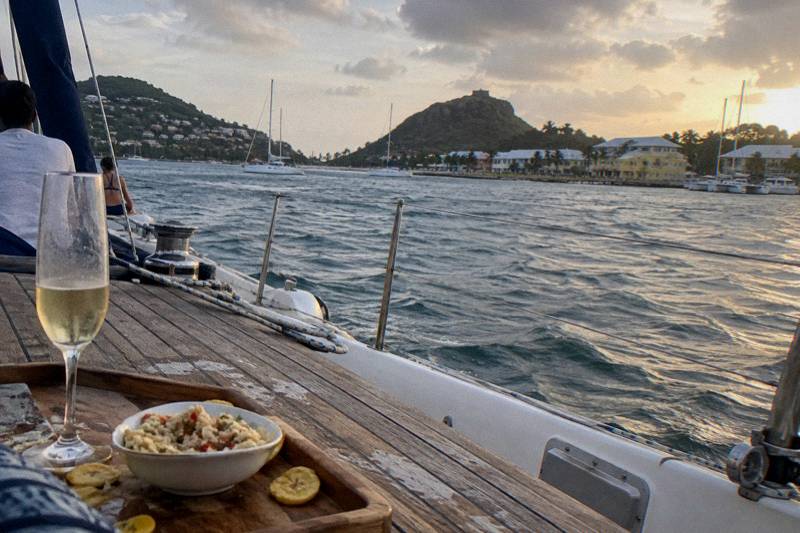
Seasickness On A Sunset Catamaran: St Lucia West Coast Sea Conditions
The west coast of St Lucia is the calmer, sheltered side of the island, and most evening sails there run short, two to three hour formats. Here is how vessel choice, duration and a few habits stack the odds in your favour.
Short answer
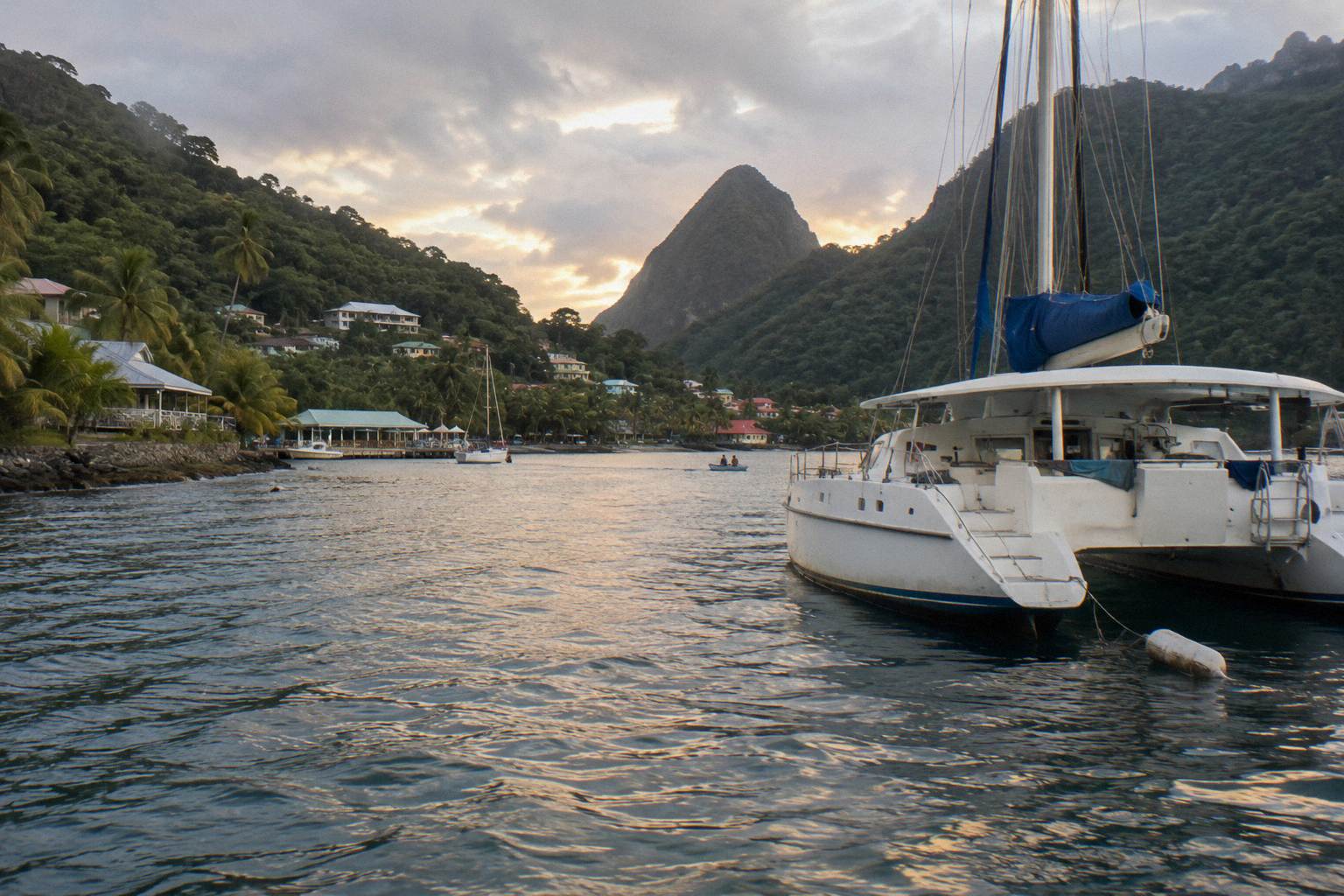
The west, leeward coast of St Lucia is the calmer, sheltered side of the island, which is where evening sails run. Catamarans are wide, stable platforms, and the sails compared here last two to three hours. Eating lightly, staying in open air near the middle of the boat, watching the horizon and plain pharmacy remedies cover most comfort planning.
An evening on the water is one of the calmer ways to see St Lucia's coast, and the boats that carry those evenings are chosen with comfort in mind. If your worry is motion rather than price, start with the private catamaran evening charter that anchors this comparison, then read on for what the sea actually does on this coast at dusk. The guide covers conditions, vessel choice, duration and the habits that keep most people comfortable.
| Fact | Detail |
|---|---|
| Calmer coast | The west coast of St Lucia is the calmer, sheltered side of the island |
| Sunset window | Sunset falls between roughly 5:33 pm and 6:36 pm in Castries through the year |
| Typical sail length | 2 to 3 hours on the catamaran and shared sail products compared here |
| Catamaran formats | A 50 ft shared catamaran, and private catamarans carrying up to 15 guests |
| Sea temperature | Typically 26 to 29 °C |
| Wettest months | October averages 250 mm of rain; March is the driest at 65 mm |
| Cancellation | Free cancellation up to 24 hours before start on most products compared here |
| Currency | All amounts below are US dollars |
How Rough Is The Sea On A St Lucia Sunset Sail?
St Lucia's evening sails run on the west, Caribbean coast, which is the calmer, sheltered side of the island. The east coast faces the open Atlantic and takes stronger trade winds and rougher water, but that is not where these boats go. No source can promise flat sea on any given evening, and conditions always depend on the weather that day and the operator's judgement. The geography gives a leeward coast with the sun setting over the sea.
The distinction matters because St Lucia sits square in the trade winds, and the two coasts behave very differently. The Atlantic side takes the full force of the easterlies. The Caribbean side sits in the island's lee, which is why the marinas, the cruise port and the swimming beaches cluster there. An evening sail from Rodney Bay, Castries or Soufriere stays on that sheltered water.
What nobody can tell you in advance is the state of any particular evening. The crew decides on the day whether conditions suit the trip, and a responsible operator will say so plainly. If you want a sense of the seasonal backdrop, the best months for a sunset sail walk through the calendar in detail.
Sunset itself shifts through the year, which changes how much of your sail happens in daylight. On the 15th of each month in Castries, sunset runs from about 5:55 pm in January to about 6:36 pm in July, dipping to about 5:33 pm in late November. The spread across the whole year is roughly one hour, according to the Castries sunrise and sunset table, cross-checked against an independent calculation. That means departure times move with the season, so check the booking calendar for the time offered on your date.
| Month (15th) | Sunset In Castries | Mean Rainfall |
|---|---|---|
| January | about 5:55 pm | 105 mm |
| March | about 6:14 pm | 65 mm |
| July | about 6:36 pm | 200 mm |
| October | about 5:44 pm | 250 mm |
| November | about 5:33 pm | 235 mm |
Do Catamarans Help With Seasickness?
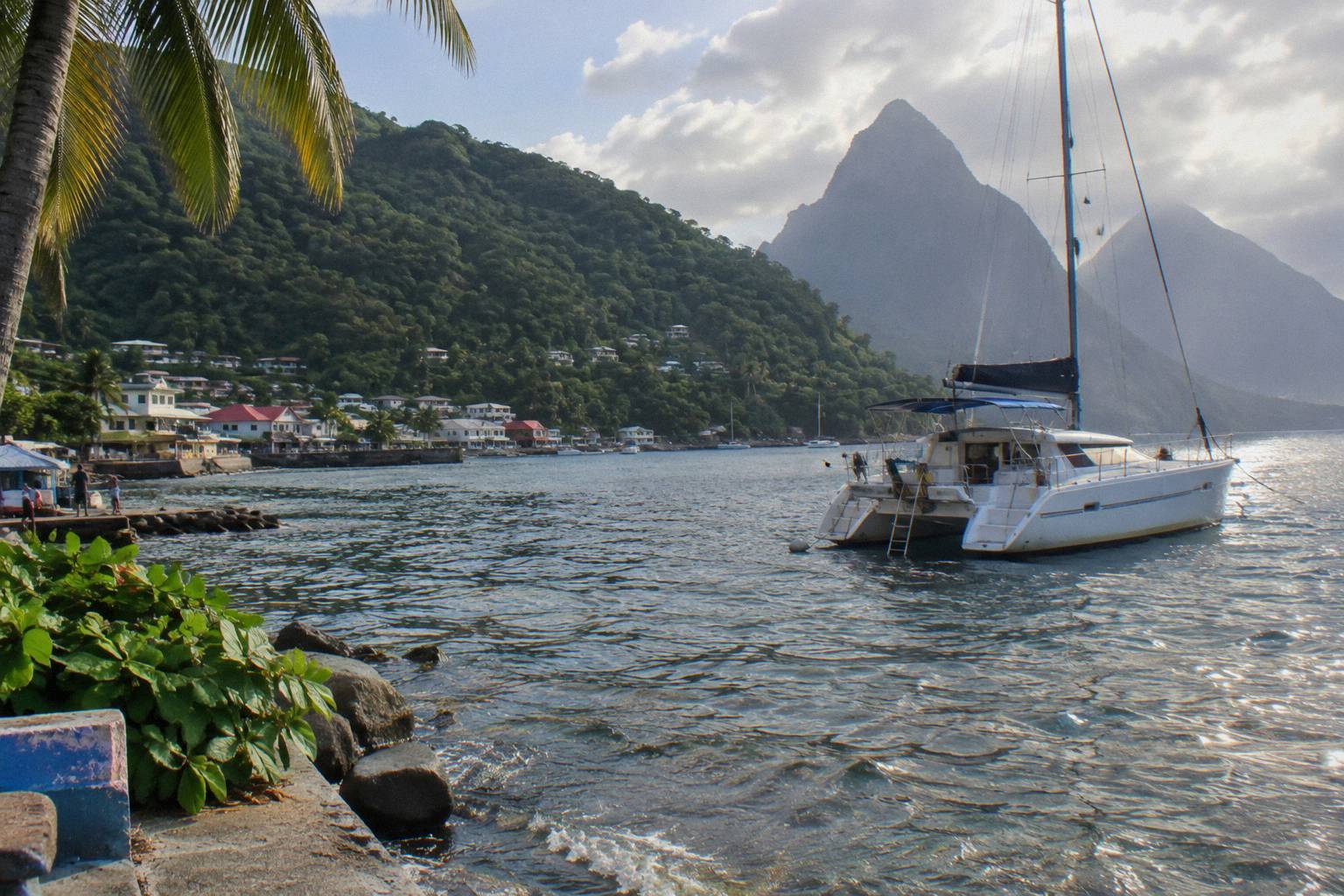
A catamaran's twin hulls give it a wide beam and two points of contact with the water, which steadies it against the rocking that triggers most motion sickness. Compared with a single-hull boat of similar length, the platform moves less abruptly in the same conditions. None of that is a cure, and sensitive sailors can still feel unwell, but the format is genuinely the friendlier choice for anyone who worries about the motion.
Think of it as a wider stance. Where a monohull rolls through its centre line, a catamaran resists that roll because the two hulls brace against the water on either side. The deck is also broad and flat, with room to walk around, sit facing forward, and move to the lee side if a breeze picks up. Being able to change position, and to stay outside in fresh air rather than shut in a cabin, is half the battle for most people.
The boats in this comparison include a 50 ft catamaran running shared sails from Castries, and private catamarans carrying up to 15 guests from Rodney Bay and from Soufriere. There is also a semi-private option on a 33 ft speedboat, which is a different feel entirely: smaller, faster, more open. Speedboats appeal to guests who enjoy the wind and spray, but if your stomach is the deciding factor, the catamaran formats are the safer pick.
Duration compounds vessel choice. The shared champagne sail from Rodney Bay and the private catamaran options run about two hours, while the Castries luxury catamaran runs three. Two hours on stable water is a modest ask of any stomach; three gives more coastline but more exposure. The trade-off gets its own section below.
Which Evening Sails Best Suit A Nervous Guest?
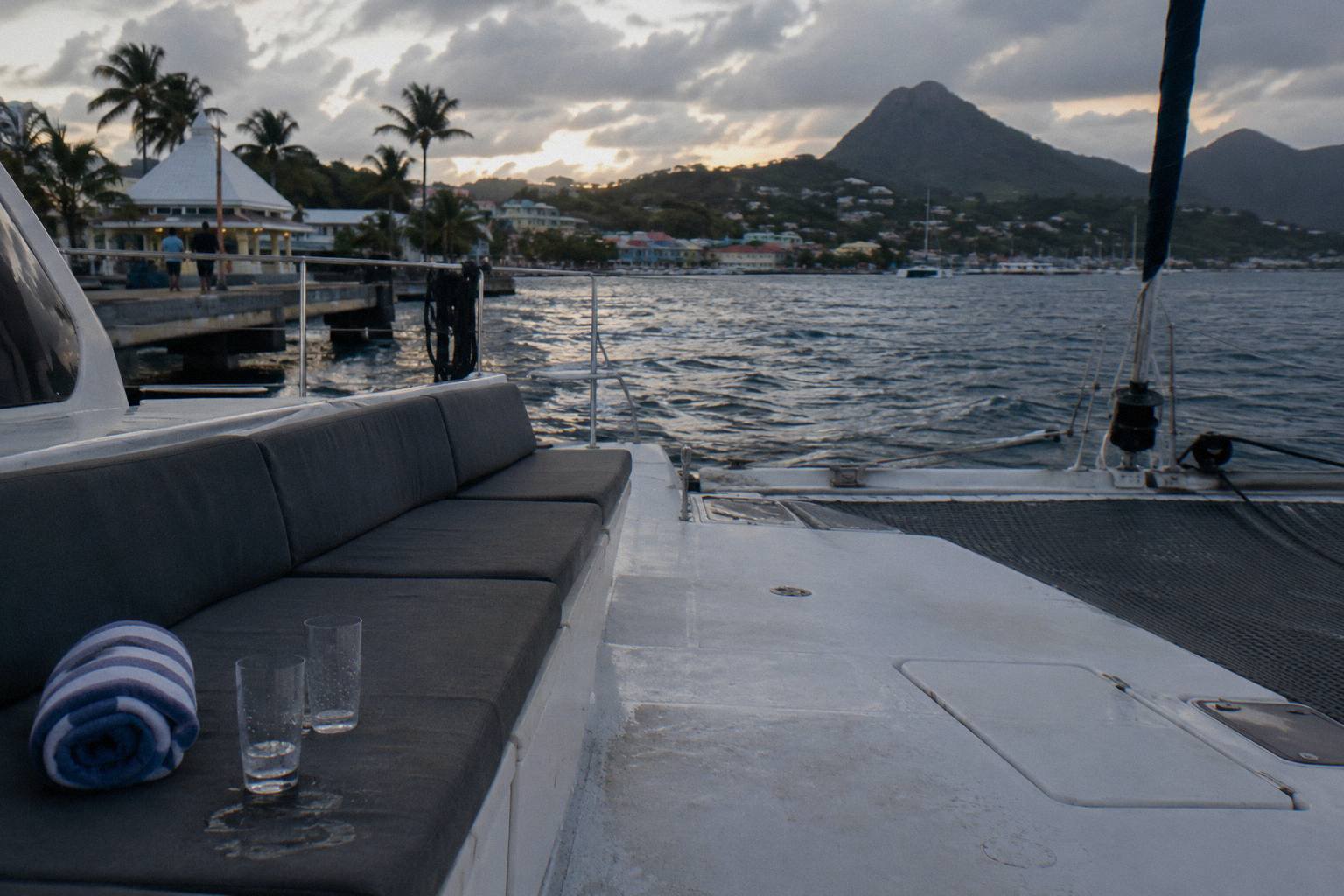
The private catamaran formats are the strongest fit, because a private boat lets you choose your seat, your side and your pace, and the catamaran hulls keep the motion gentle. Among shared options, the two hour champagne sail from Rodney Bay is the shortest commitment with drinks included. The 50 ft catamaran from Castries adds an hour and carries a minimum age of 16, with all sales final, so read the terms before booking if your plans might move.
Start with "Private Catamaran Sunset Cruise from St Lucia for Up to 15 Guests", from US$1,285 per boat for two hours. It runs from Rodney Bay Marina with hotel pickup and drop-off included, an open bar, and all taxes and fees in the price, and it cancels free up to 24 hours before start. For a group pooling the cost, a private deck also means no crowding at the rail and no schedule you did not choose. You can see the private catamaran's full details before committing.
The shared "Champagne Sunset Sail in St. Lucia" from Rodney Bay is the gentle entry point: two hours, from US$75, with an open bar, snacks, a glass of champagne and hotel pickup in the north. It rates 4.5 across 221 reviews, the largest review pool of any product compared in the guide, and it too cancels free up to 24 hours out. For a first evening sail where motion is a worry, two hours with a drink in hand is a sensible trial.
At the other end, the "St. Lucia Luxury Sunset Cruise From Castries" runs three hours on a 50 ft catamaran, from US$174, with a premium bar and hors d'oeuvres. It rates 3.9 from 18 reviews, and importantly it is all sales final, with a minimum age of 16. No cancellation flexibility and a longer time on the water make it the choice to weigh most carefully if you are prone to motion sickness.
| Sail | Vessel | Duration | From price | Cancellation |
|---|---|---|---|---|
| Private Catamaran Sunset Cruise from St Lucia for Up to 15 Guests | Private catamaran, up to 15 guests | 2 hours | from US$1,285 per boat | Free up to 24 hours before |
| St. Lucia Luxury Sunset Cruise From Castries | 50 ft shared catamaran | 3 hours | from US$174 | All sales final |
| Champagne Sunset Sail in St. Lucia | Shared sail from Rodney Bay | 2 hours | from US$75 | Free up to 24 hours before |
| Luxury Sunset Cruise Experience Lucian Sunset Vibes | 33 ft speedboat, 2 to 10 guests | 2 hours | from US$95 | Free up to 24 hours before |
| Private 3-Hour Catamaran Sunset Cruise from Soufriere for Up to 15 Guests | Private catamaran from Soufriere | 3 hours | from US$2,160 per boat | Free up to 24 hours before |
Note that the two private catamaran prices above carry a per-boat basis as shown, while the shared prices are per person; private speedboat options elsewhere on the site are quoted "from" only, because the basis is unverified, and prices vary by date and group in every case. When in doubt about which format suits a sensitive sailor, the operator comparison guide breaks the decision down further.
A private boat also answers the social side of the worry. Nothing aggravates motion sickness like anxiety, and nothing eases anxiety like control: your own group, your own music or silence, and a captain who can shorten a loop if someone needs the steady water inside the bay. Ask the operator when you book about routing inside sheltered water; several depart from bays specifically because of it.
Two Hours Or Three: Does Duration Change The Odds?
Yes, and roughly in proportion. Motion sickness builds with exposure time, so a two hour sail is a smaller dose than a three hour one on identical water. Most evening formats here run two hours, including the private catamarans from Rodney Bay and the shared champagne sail, while the Castries luxury catamaran and the Soufriere catamaran run three. If your history with boats is shaky, book the shorter format first.
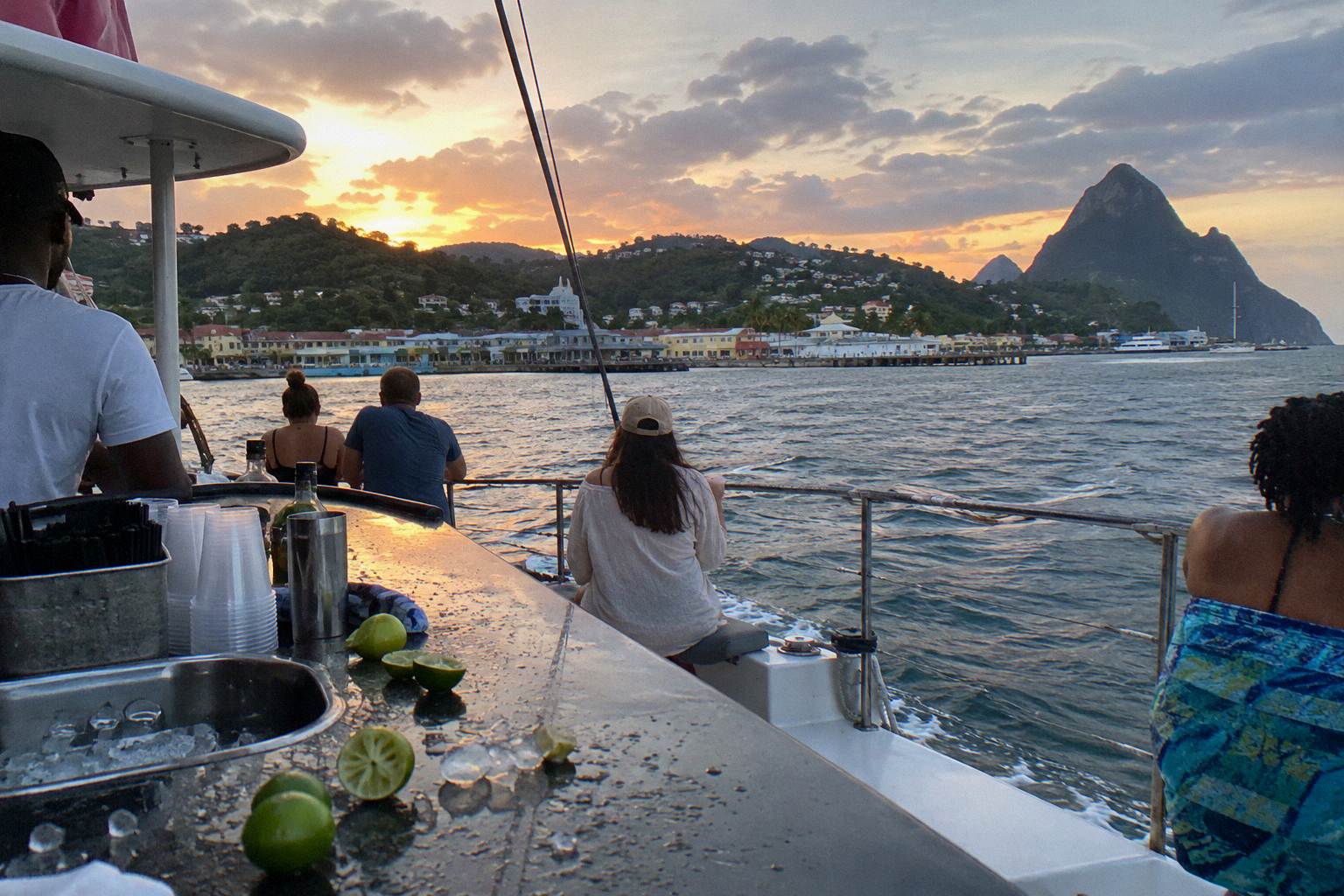
Two hours is enough to clear the anchorage, run a stretch of coast and be back before full dark for most of the year, given the sunset window of roughly 5:33 pm to 6:36 pm. It is also short enough that even a guest who feels queasy for part of it is not facing a long evening. Several private speedboat captains advertise flexible start times, which lets you align the trip tightly with the sunset rather than padding the time afloat.
Three hours suits guests who want the full coastline, hors d'oeuvres and a slower rhythm. The Castries 50 ft catamaran pairs its three hours with a premium bar and seafood cocktails; the Soufriere private catamaran covers the Pitons stretch of coast with a professional guide. Both are catamarans, so the stability argument holds; it is simply three hours of it rather than two.
A useful middle path is the two and a half hour private cruise on the Pigeon Island route, from US$230 for up to 10 guests with local Piton beer and rum punch aboard. The extra half hour over the standard two buys coastline without committing to a full three. See dates and party sizes on its page before deciding, since departure points and routing differ.
What To Eat, Drink And Pack Before Boarding
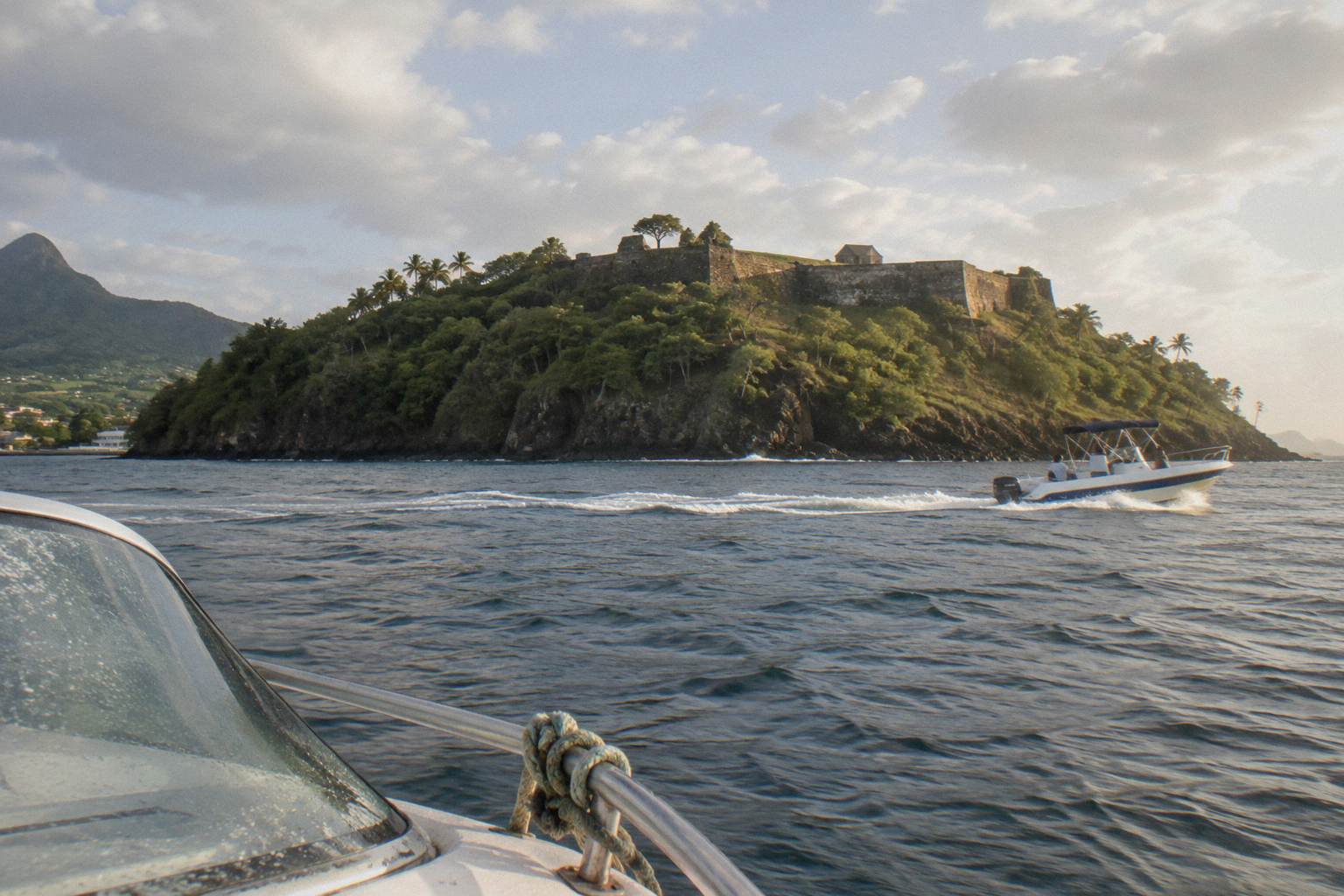
Eat lightly and not too long before boarding, keep hydrated with water rather than spirits, and go aboard with plain food in your stomach rather than empty. Once afloat, sit near the middle of the boat where motion is least, face forward, stay in open air, and fix your eyes on the steady horizon rather than on close-up objects. Pack water, a light layer and any remedy you already trust.
The pattern that trips most people is the empty-stomach mistake: skipping food out of nerves, then reacting badly to the first drink. A light meal an hour or two before boarding gives your body something steady to do. Aboard, the open bar on several of these products is generous, and alcohol on an empty stomach plus gentle motion is a poor combination for anyone, seasick or not. Alternate drinks with water.
Position on the boat matters as much as food. The middle of the vessel, low and centred, moves least; the bow and the extremes of the deck move most. Facing the direction of travel helps, because your inner ear and your eyes then agree about what is happening. The open deck of a catamaran is ideal for this: fresh air, a wide view and nowhere enclosed to trap you.
None of this is medical advice, and anyone who suffers severe motion sickness should ask a pharmacist or doctor before travelling. For packing beyond the remedy question, the what to wear on a sunset sail guide covers layers, footwear and the evening temperature drop.
| Habit | What It Addresses |
|---|---|
| Light meal one to two hours before boarding | An empty or overloaded stomach reacting to motion |
| Sitting mid-deck, facing forward | The greater pitch and roll at the bow and stern |
| Staying in open air | Enclosed cabins worsening nausea |
| Watching the distant horizon | The mismatch between eyes and inner ear |
| Alternating drinks with water | Dehydration and alcohol compounding nausea |
| Skip reading and close-up screen time | Visual fixation on near objects during motion |
Pharmacy Remedies And What To Ask For
Standard over-the-counter motion sickness tablets and acupressure wristbands are widely sold, and a St Lucia pharmacy will stock the usual options; ask for motion sickness tablets without brand names and follow the packet directions, which usually mean taking the tablet before boarding rather than after symptoms start. The guide makes no medical claims and cannot advise on suitability; a pharmacist or doctor should answer anything specific to your health.
The timing point is the one worth repeating, because it is the most common failure. Oral remedies generally need to be in your system before the motion begins, so a tablet taken at the dock as you board may be too late for the first half hour. Read the packet's own timing instructions and work backwards from your departure time, whatever the remedy is.
Bring your own if you have a brand you already know works for you, since island pharmacy stock varies. Wristbands, ginger products and plain crackers are the low-intervention options many sailors carry. None of these are endorsed here as effective; they are simply the categories people use, and your own experience with them is the best guide.
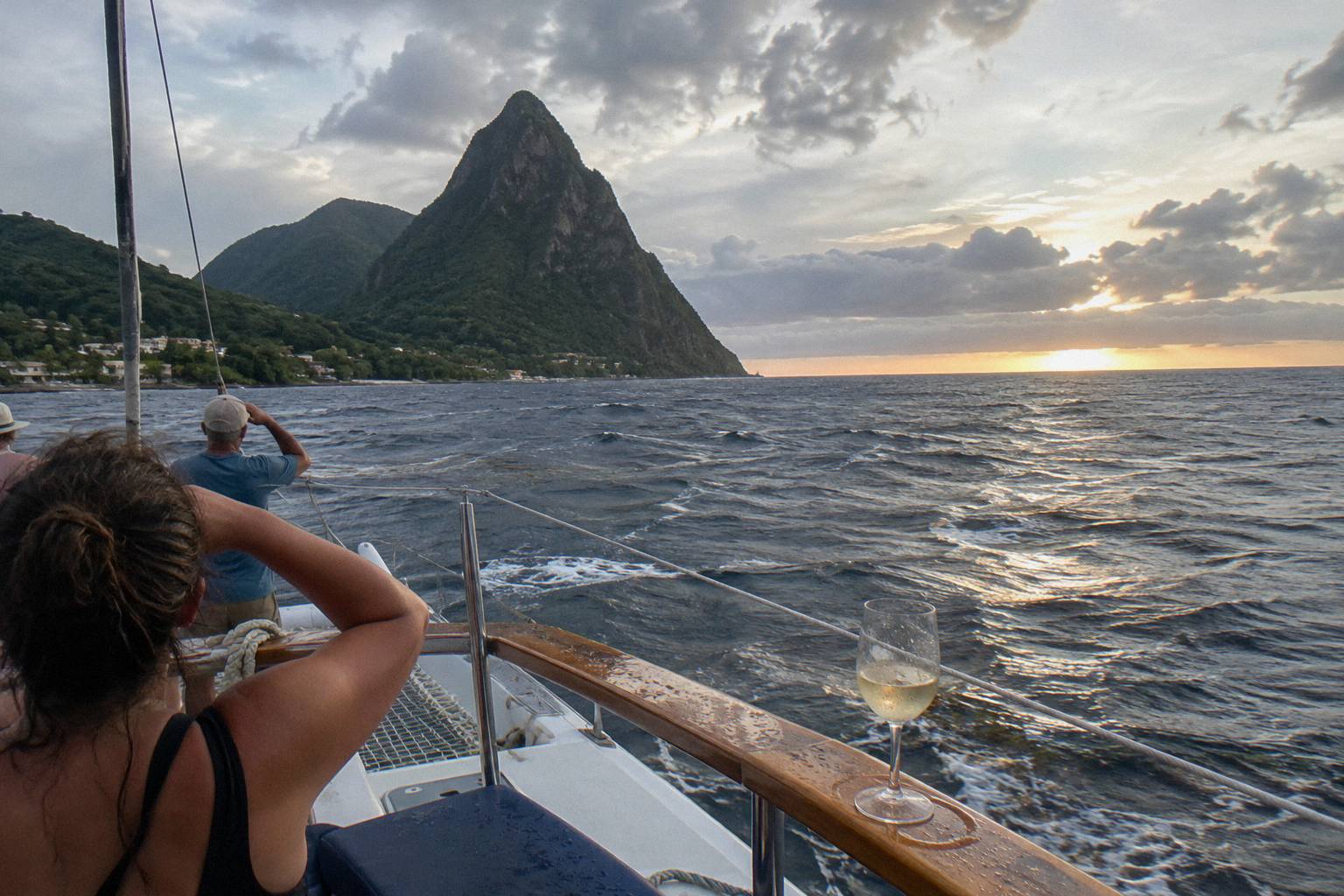
Sea temperature in St Lucia typically sits between 26 and 29 °C, per the Saint Lucia sea temperature and climate page, so overheating is unlikely on deck but a light layer for after sunset is worth packing. Air temperatures average 26 °C in January and peak near 28 °C in September, per the Saint Lucia climate reference, so the evening drop is real but modest.
Weather, Cancellation And Reading The Season
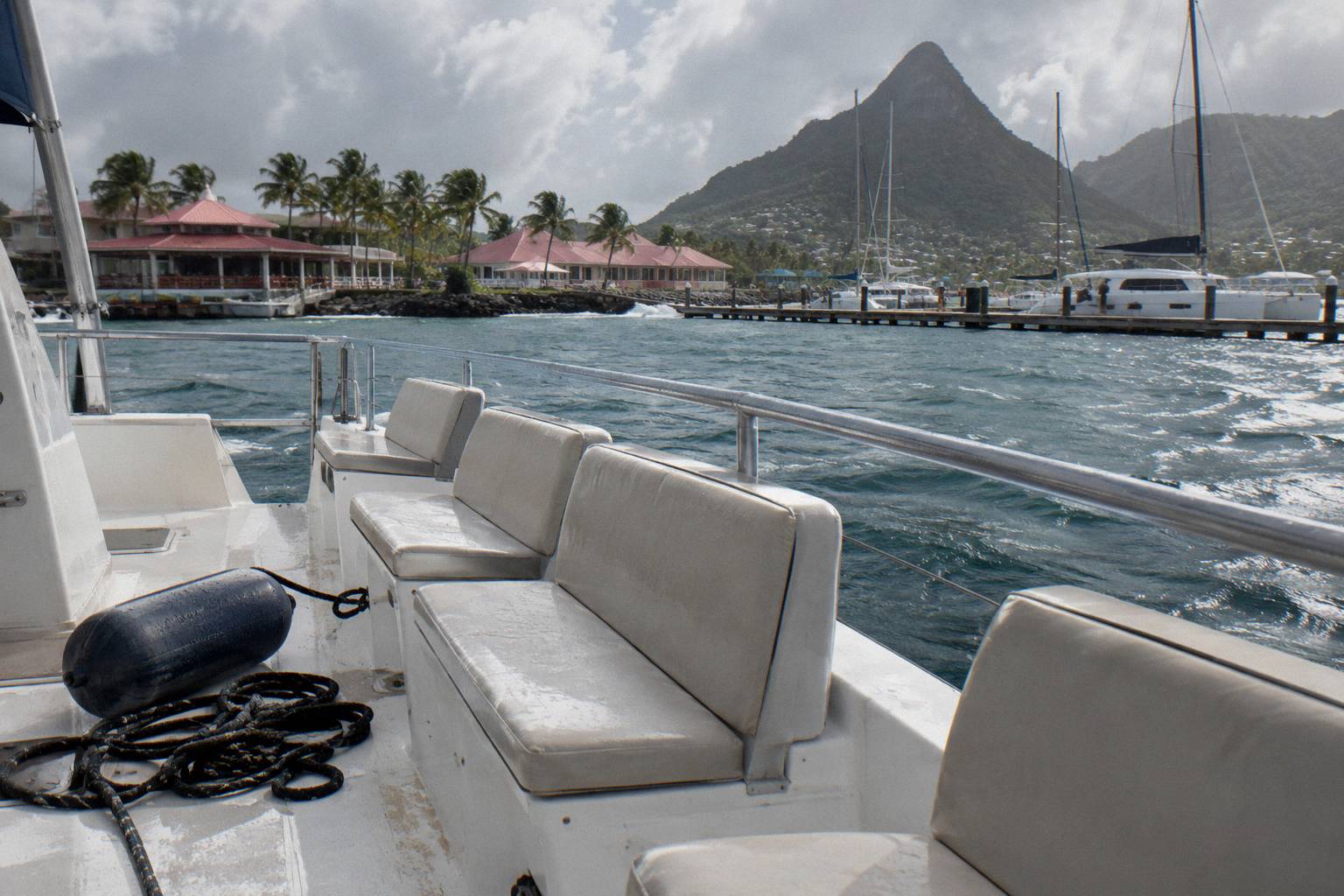
Free cancellation up to 24 hours before start, which most products here offer, is a booking-policy fact and not a weather promise; the operator decides on the day whether conditions are safe and pleasant. The Atlantic hurricane season runs June 1 to November 30, and the wettest months locally are October at 250 mm of rain on average and November at 235 mm, while March is driest at 65 mm. Booking outside the wettest months simply narrows the odds.
It helps to separate two different risks. One is a named storm, which is a season-level question: the National Hurricane Center climatology page records the season as June 1 to November 30 with a 1991 to 2020 average of 14 named storms, 7 hurricanes and 3 major hurricanes basin-wide. The other is an ordinary rainy or breezy evening, which can happen in any month including the dry one, and which is the crew's call, not the calendar's.
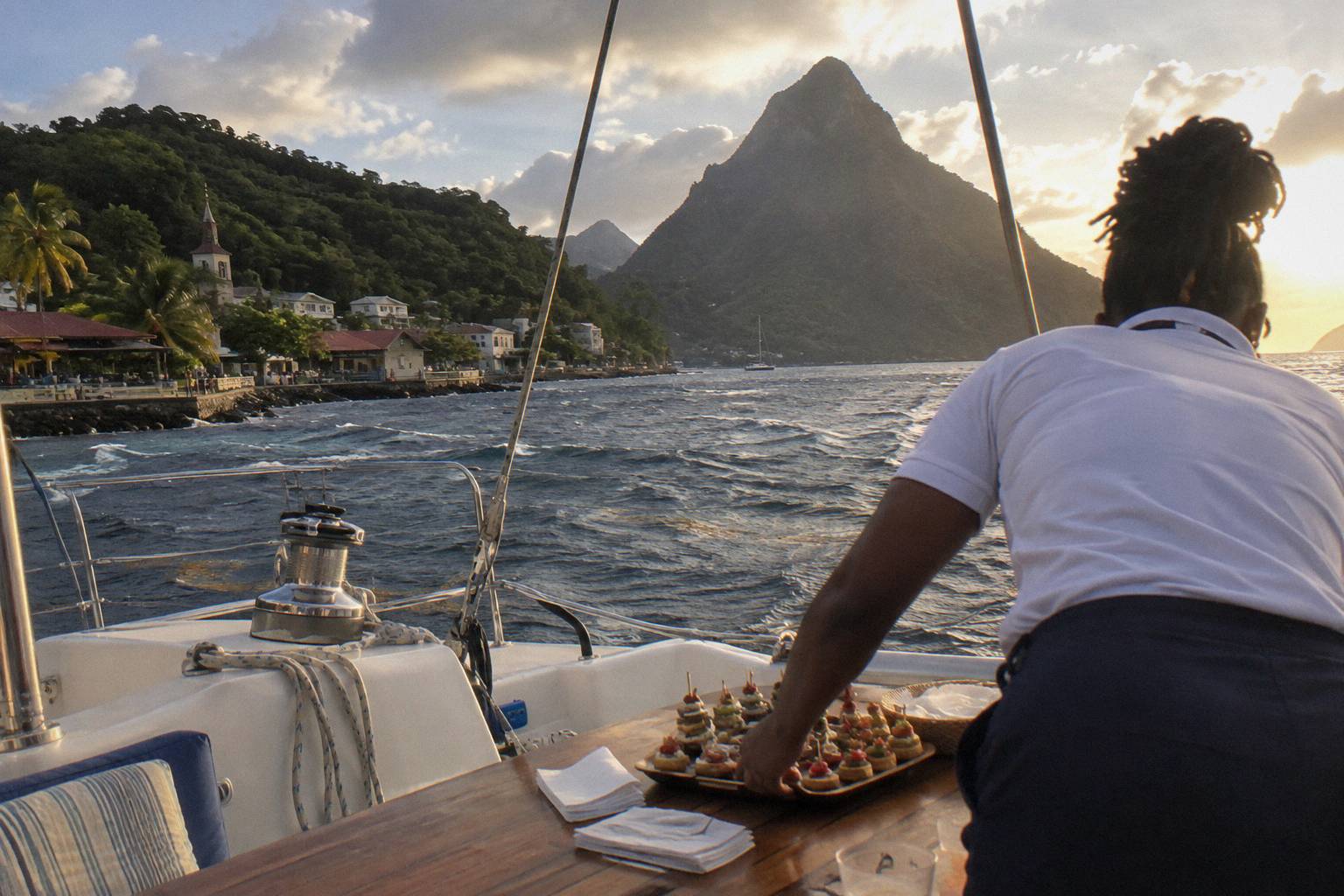
Between them sits the rainfall pattern: dry season runs about January to mid-April, wet season about mid-June to November, with December and mid-April to mid-June transitional. Rain does not automatically cancel a sail, and a shower at 3 pm often clears by departure. What you can do is book early in your stay rather than on your last evening, so a postponed trip can be re-run another night.
| Season | Months | Mean Rainfall Pattern |
|---|---|---|
| Dry season | About January to mid-April | March driest at 65 mm |
| Transitional | Mid-April to mid-June | Rainfall rising from 85 mm |
| Wet season | About mid-June to November | October peak at 250 mm |
| Transitional | December to early January | 130 mm in December |
On the policy side, most products compared here cancel free up to 24 hours before start. The Castries luxury catamaran is the exception, sold as all sales final, so a nervous guest weighing that one should decide with that in mind. If a cancellation question is your main worry, the weather cancellation explainer covers what happens next in detail.
Booking ahead also matters for availability rather than weather, and the question of whether you need to book in advance has its own write-up. For now, the planning rule is simple: reserve the date early, keep the cancellation window in mind, and reconfirm the meeting point the day before. Ask the operator about pickup specifics when you book, since these differ by product and hotel.
What Trips People Up Before You Book
The recurring mistakes are booking a three hour format with a history of bad motion, drinking on an empty stomach, sitting at the bow because the photos look better, and treating free cancellation as a weather guarantee. Guests also forget that the east coast roughness they may have heard about is not where these sails run, and that all sales final means exactly that on one product compared here. Each mistake has a plain fix.
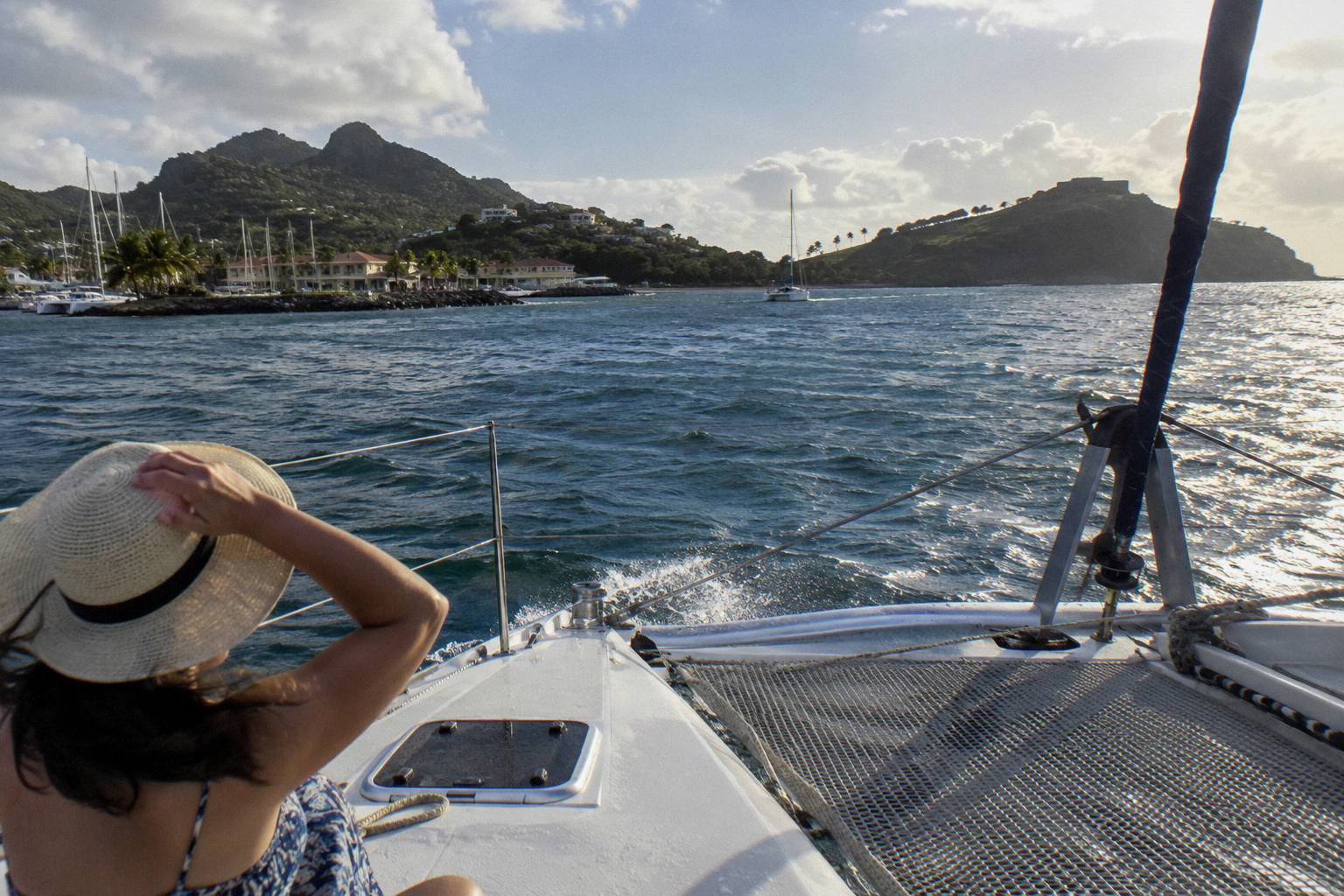
The first fix is format: pick two hours, pick a catamaran, and if the budget stretches, pick private. The second is food: eat lightly before, not nothing. The third is position: claim the mid-deck seat early and face forward, whatever the view from the bow promises. The fourth is expectations: a private catamaran, a shared champagne sail and a speedboat are different experiences of the same water, and the shared versus private comparison sets out the differences.
The fifth mistake is assuming the sea owes you a green flash or a specific sky. Conditions decide what you see, and the physics of a green flash depends on temperature-inversion layers near the horizon that no operator can summon; the Atmospheric Optics mirage page explains the mechanism. Treat it as a bonus if the air cooperates.
The last mistake is currency confusion. Amounts in the guide are US dollars, and US cash is widely accepted on the island, though the local currency is the Eastern Caribbean dollar; the Saint Lucia tourism travel tips page covers currency, service charges and tipping. Gratuities are excluded on most sails compared here, and tipping of about 10 to 12% is customary when the crew earns it.
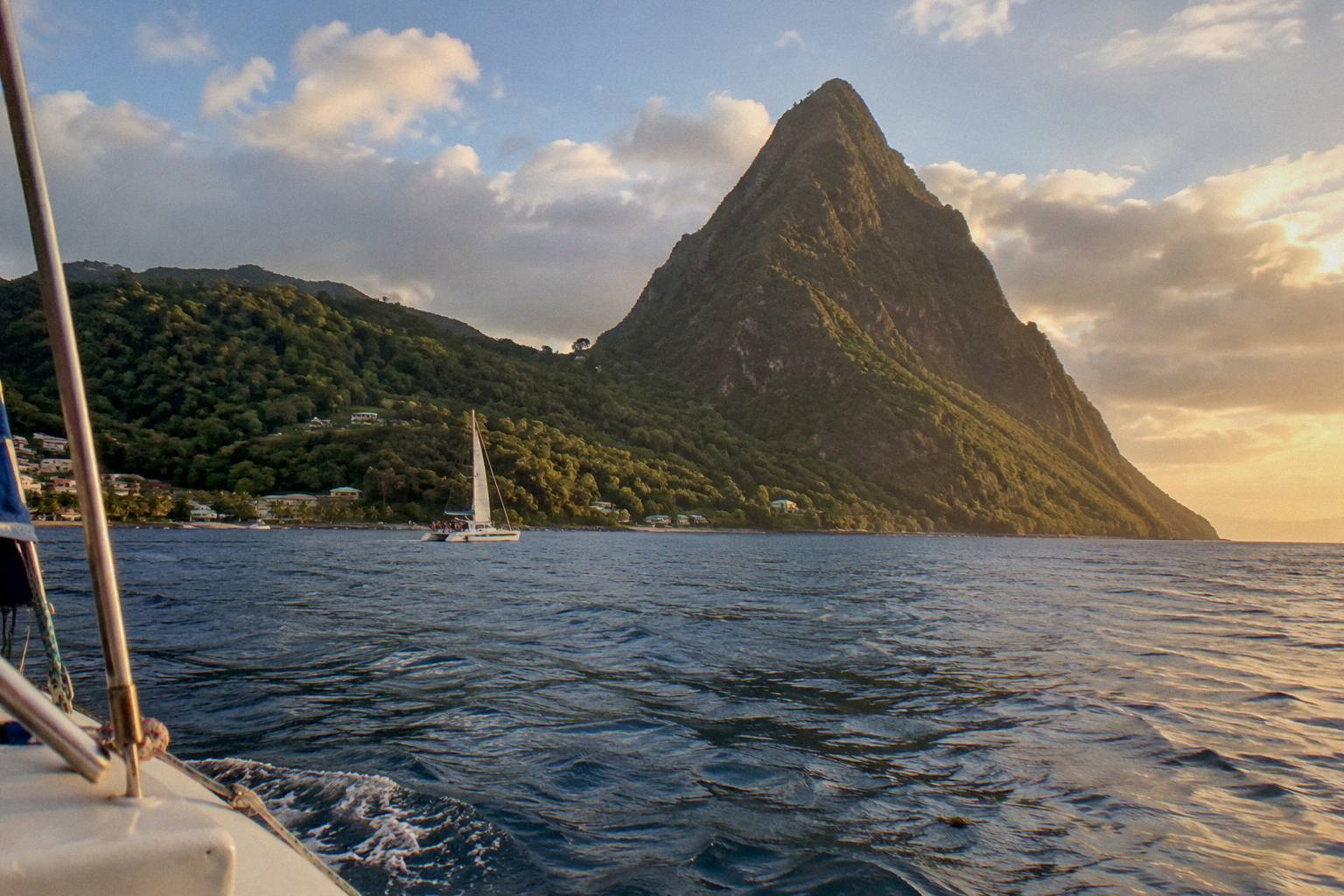
Whatever you choose, a St Lucia Sunset Cruise on the leeward coast at dusk remains one of the gentler ways to be on the water, and a stable catamaran on a two hour run is about the lowest-stakes version of it there is. Book with the cancellation window in mind, eat something first, and claim the middle of the deck.
Common Questions About Sunset Cruise Seasickness
Is The Sea Rough On A St Lucia Sunset Cruise?
The west, Caribbean coast where evening sails run is the calmer, sheltered side of the island. The east, Atlantic coast takes stronger trade winds, but the boats do not sail there. No source can promise flat water on a given evening; conditions depend on the weather that day and the operator's judgement.
Are Catamarans Better Than Monohulls If You Get Seasick?
Generally, yes. A catamaran's twin hulls give it a wide, stable platform that resists rolling, and the open deck lets you stay in fresh air with a clear view of the horizon. That does not make anyone immune, but it is the friendlier format for nervous sailors.
What Should I Eat Before A Sunset Sail To Avoid Feeling Ill?
Eat a light meal one to two hours before boarding rather than arriving on an empty stomach, and keep hydrated with water. Aboard, alternate any drinks with water rather than drinking alcohol quickly. Heavy food and no food both cause problems.
Where Is The Best Place To Sit On A Catamaran?
Near the middle of the boat, low and centred, facing the direction of travel. The bow and the far ends of the deck move the most. Staying outside in open air and fixing your eyes on the horizon also help.
Do Motion Sickness Tablets Work If Taken On The Boat?
Often not, because oral remedies usually need to be in your system before the motion starts. Follow the timing directions on the packet and take the tablet before boarding. This is general information, not medical advice; ask a pharmacist or doctor about anything specific to your health.
Can I Cancel If I Am Worried About Conditions That Day?
Most products compared here offer free cancellation up to 24 hours before start, which is a booking policy and not a weather promise. The Castries luxury catamaran is all sales final. Within 24 hours, the operator's own terms apply, so ask when booking.