Green Flash At Sea: How Likely Is It From A St Lucia Sunset Sail
The green flash is a real optical effect of the last sliver of sun, and a west-facing island is a fair place to look for one. Here is the physics, the conditions that decide it, and how to choose a sail that faces open water at the right minute.
Short answer
The green flash is a brief burst of green light caused by atmospheric refraction as the last sliver of sun crosses the horizon. St Lucia's west coast faces open Caribbean Sea, which gives clean horizon lines. No source gives odds of seeing one; it depends entirely on the air, haze and clouds that evening.
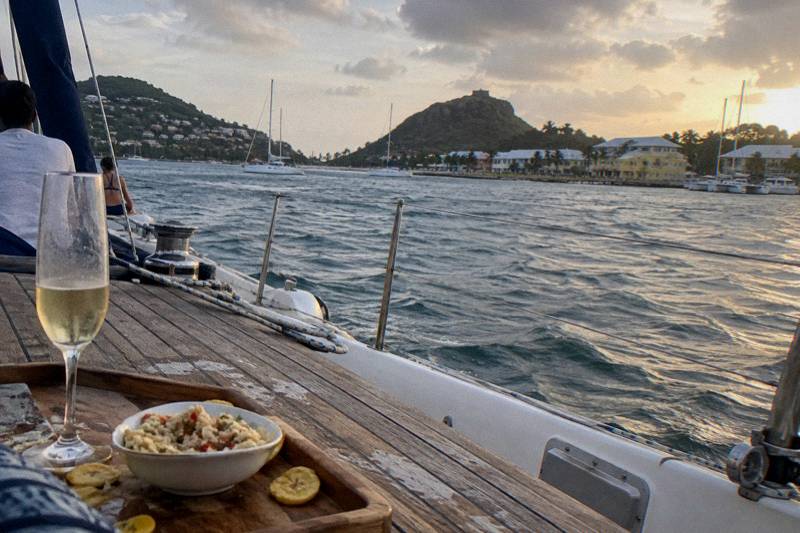
Every evening sail on this island is a west-facing one, and that single geographic fact is why people ask about the green flash here at all. The Champagne Sunset Sail in St. Lucia and its shared-sail cousins in the category grouped as shared champagne sunset sails run out of Rodney Bay and Castries onto the Caribbean Sea, straight toward the point where the sun goes down. This guide covers what the green flash actually is, what the air does to it, which months give you the most evening light to work with, and how to pick a boat that keeps the horizon in view.
| Fact | Detail |
|---|---|
| What the green flash is | A brief optical effect at the moment the last sliver of sun disappears, caused by atmospheric refraction |
| Why it happens | Refraction bends shorter wavelengths more; temperature-inversion mirage layers near the horizon can magnify the effect |
| Does St Lucia face the right way | The west coast faces west, so the sun sets over the Caribbean Sea |
| Sunset range all year | Roughly 5:30 to 6:40 pm local time in Castries |
| Earliest sunset | About 5:33 pm, around November 21 |
| Latest sunset | About 6:36 pm, around July 11 |
| Can odds be promised | No; the effect depends on the air, haze and cloud that evening |
| Best vantage | An unobstructed sea horizon at eye level or above, watching the last sliver |
What The Green Flash Actually Is
The green flash is a short-lived burst of green light that can appear at the instant the top edge of the sun vanishes below the horizon, and it is pure physics rather than a trick of imagination or a local legend. Earth's atmosphere bends light, and it bends the shorter, bluer and greener wavelengths slightly more than the longer red ones. As the sun drops, that differential bending smears its image into a stack of colour fringes. The red end disappears first, and for a moment the topmost sliver, magnified by refraction, can show green. A temperature-inversion layer near the horizon, where warm air sits over cooler air, can act like a lens and distort or stretch that sliver into the shapes people describe. The Atmospheric Optics page on mirages and green flashes explains the mechanism in full, and it is the reference to read if you want the optics rather than the folklore.
Two things follow from the physics. First, the effect belongs to the very last moments of the sun's disc, not to the orange hour before it. A green flash is not a sunset glow; it is a boundary event, over in moments, at the horizon line itself. Second, anything that interrupts that horizon line, a cloud bank sitting low, haze, an island headland, blocks the one sliver of sun where the green appears. That is why the vantage matters as much as the weather, and why a boat on open water has an inherent advantage over a beach with headlands to one side.
It is worth being equally clear about what nobody can tell you. What is documented is the mechanism, and the fact that observers on west-facing coasts with clean marine horizons report it. Treat it as a bonus that depends on the air that evening, never as a reason to book, and never as something a crew or an operator can deliver on request. The evenings it appears and the evenings it does not can look identical ten minutes before the sun touches the water.
Why The West Coast Gives You A Clean Horizon
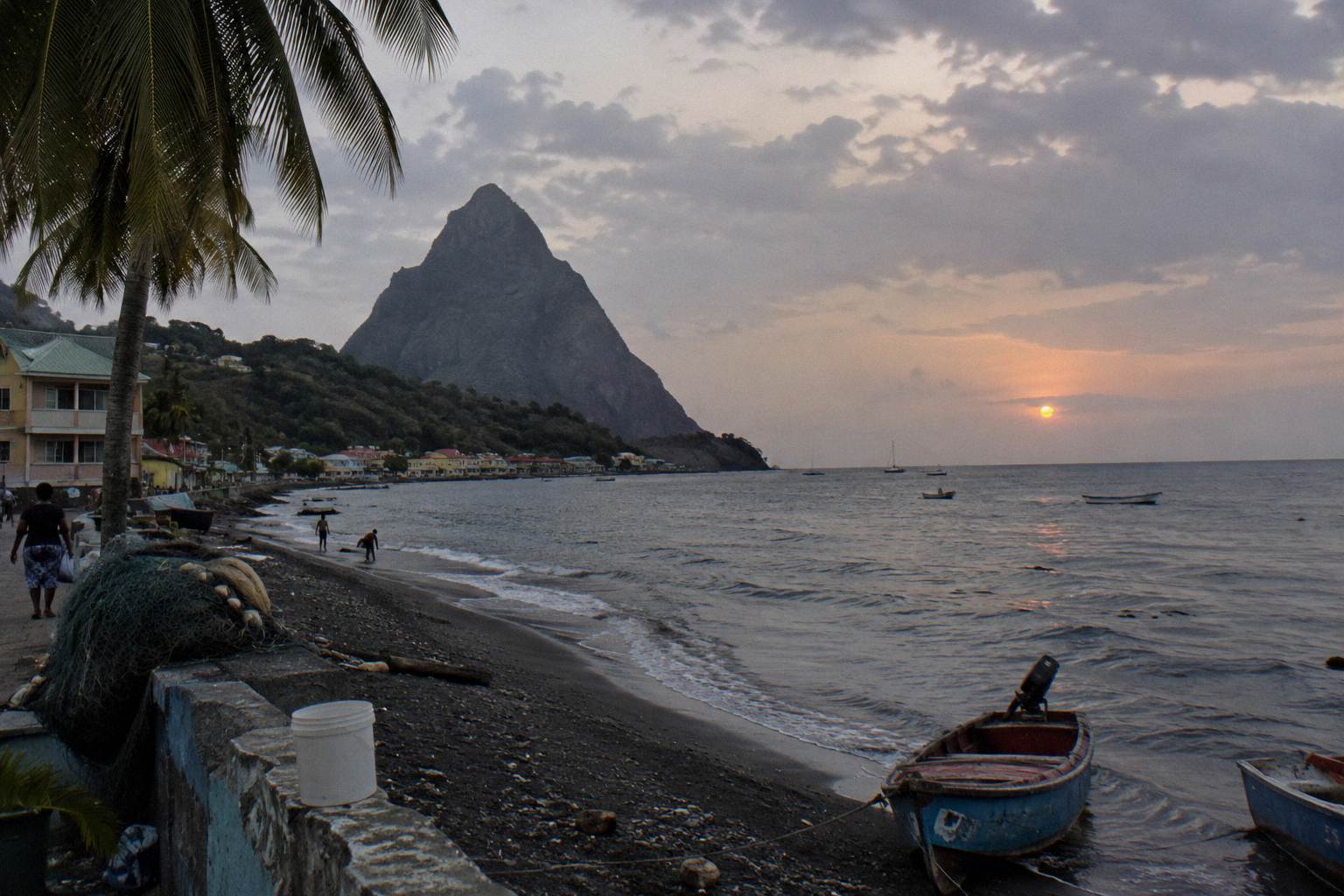
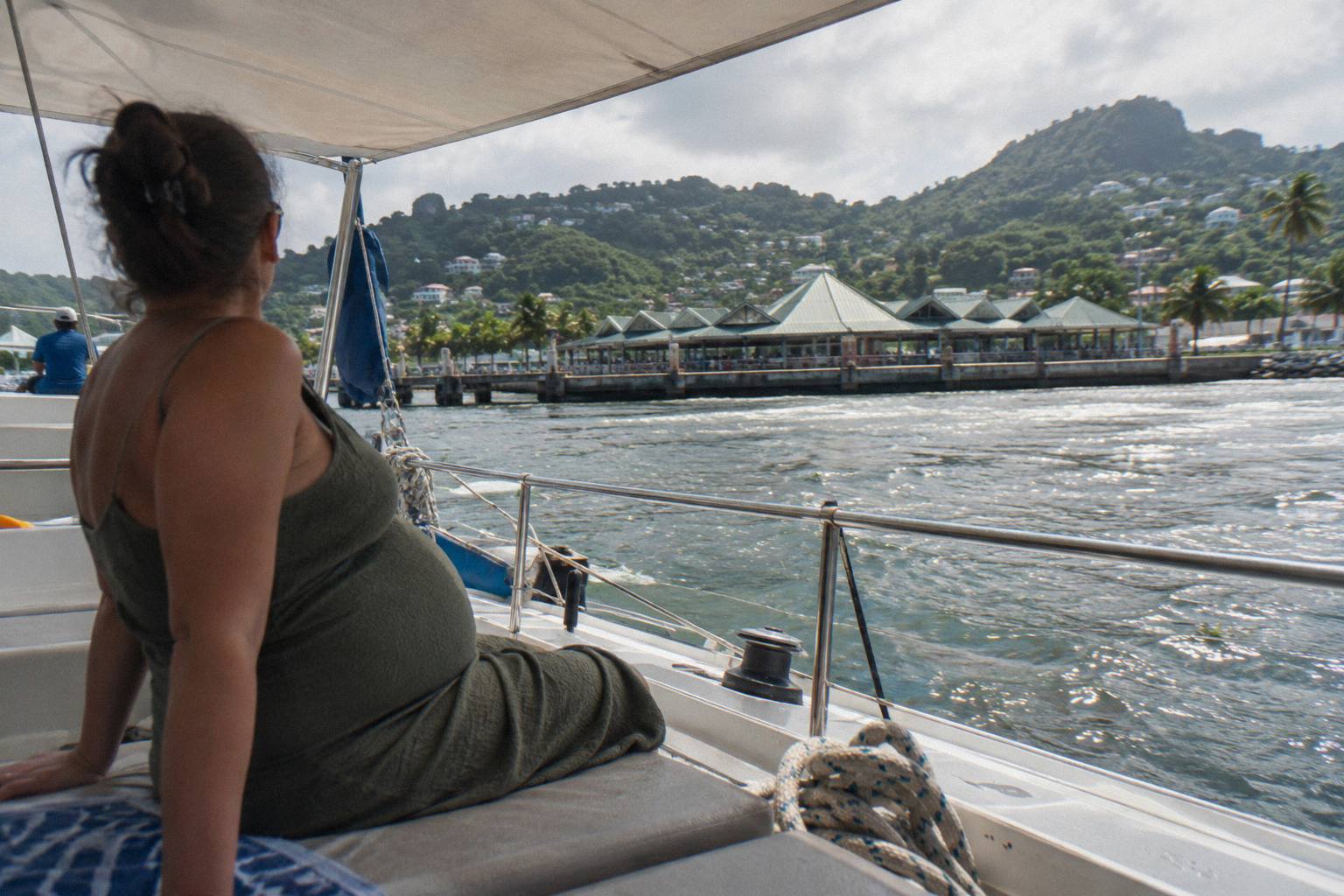
St Lucia's west coast faces directly onto the Caribbean Sea, so from a boat off Rodney Bay, Marigot Bay or Soufriere the sun sets over open water rather than over land, which is the single most important geographic factor for horizon-watching. The island sits at about 14 degrees north in the eastern Caribbean, and its leeward shore runs north to south along a sea that stretches unbroken toward Central America. When a sail leaves Rodney Bay and turns west, there is nothing between the deck and the setting sun but sea and air. The Saint Lucia tourism page on Marigot Bay describes the bay's calm waters and scenic marina, and the same sheltered character that yachts appreciate is what keeps the evening sea workable for a small boat.
The west coast is also the calmer, sheltered side of the island. The Atlantic beats the east shore, while the Caribbean side sits in the lee, which is why the marinas, the cruise port at Castries and most of the evening-sail departures cluster here. For a green-flash attempt this matters in a practical way: a boat that is not pitching gives you a steadier eye line on the horizon, and two hours on flat water is a better watching platform than the same time frame bouncing in open swell. The shelter is real but it is not a promise; the sea state on any given evening is what it is.
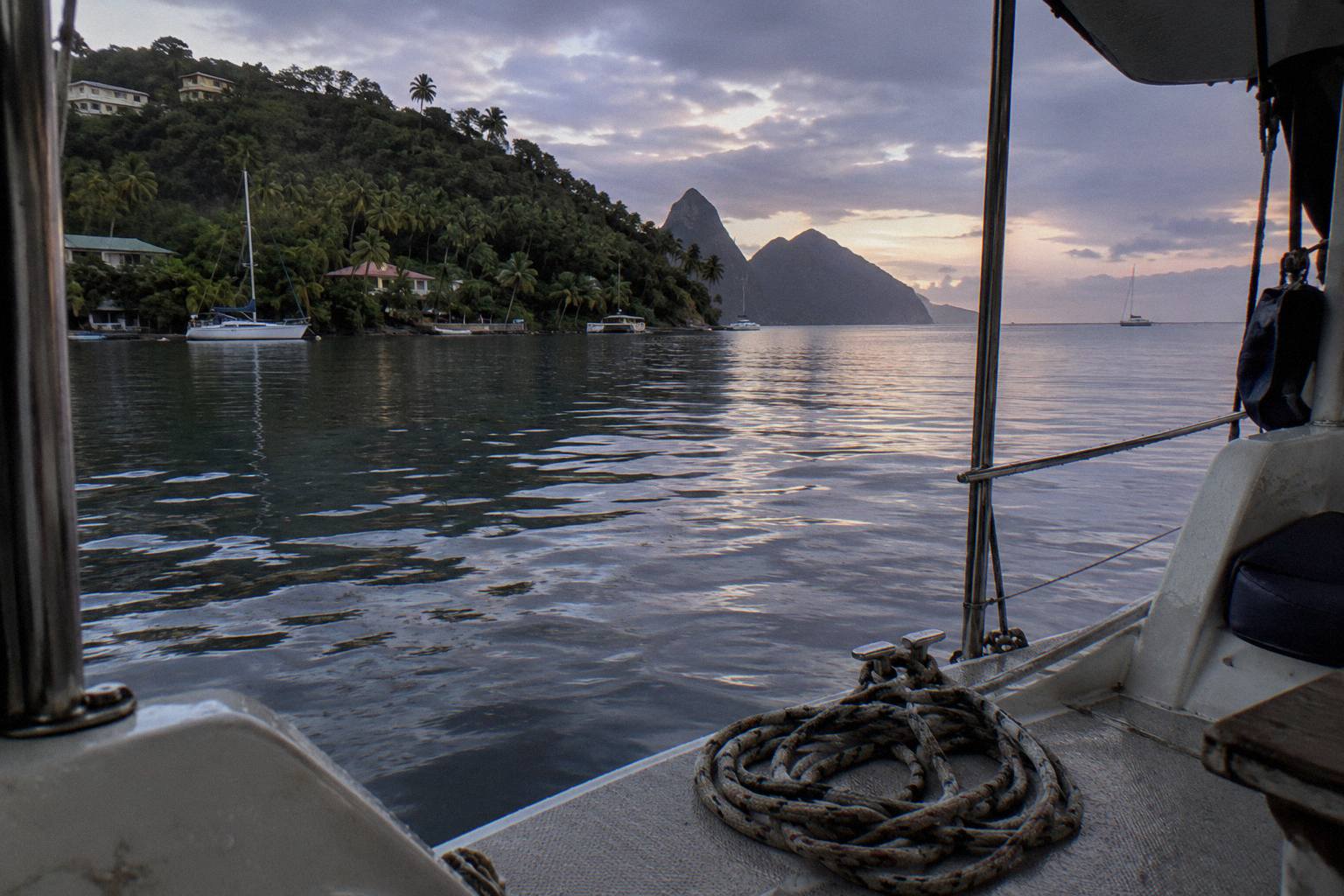
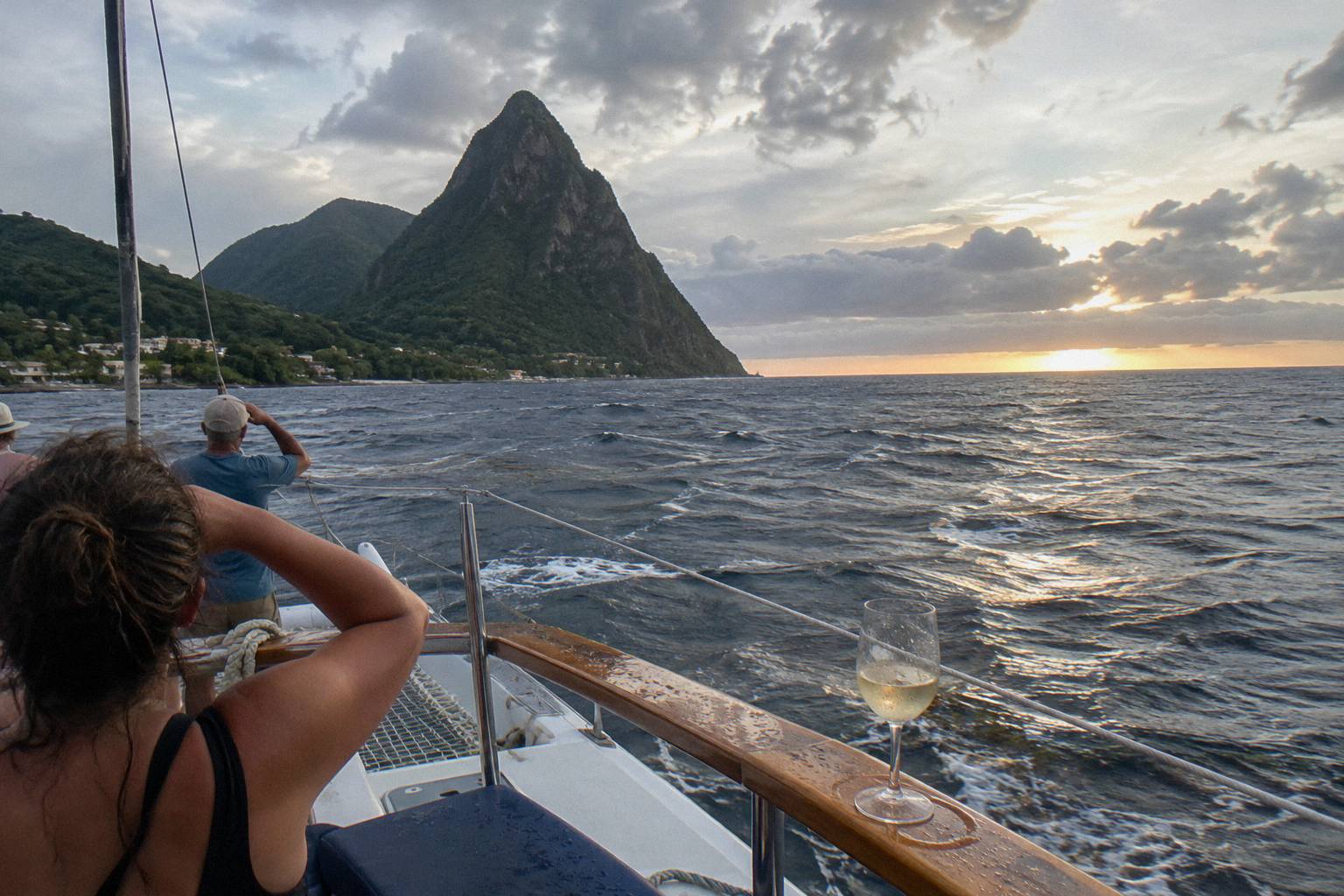
The departure points themselves shape what you see. Rodney Bay sails clear the bay and its marina traffic, with Pigeon Island National Landmark, a 44-acre park joined to the mainland by a causeway, sitting at the northern end of the anchorage. Castries departures work off a port that the Saint Lucia Air and Sea Ports Authority describes as two complexes, Pointe Seraphine and La Place Carenage, with water taxis running between them; once a boat is past the harbour mouth the horizon opens west. Soufriere sails start under the Pitons, Gros Piton at 798 m and Petit Piton at 743 m inside the UNESCO-inscribed Pitons Management Area, and those peaks do exactly what headlands do anywhere: they can mask the low sun depending on the boat's heading. A crew that runs west of the peaks before the final minutes restores the open horizon.
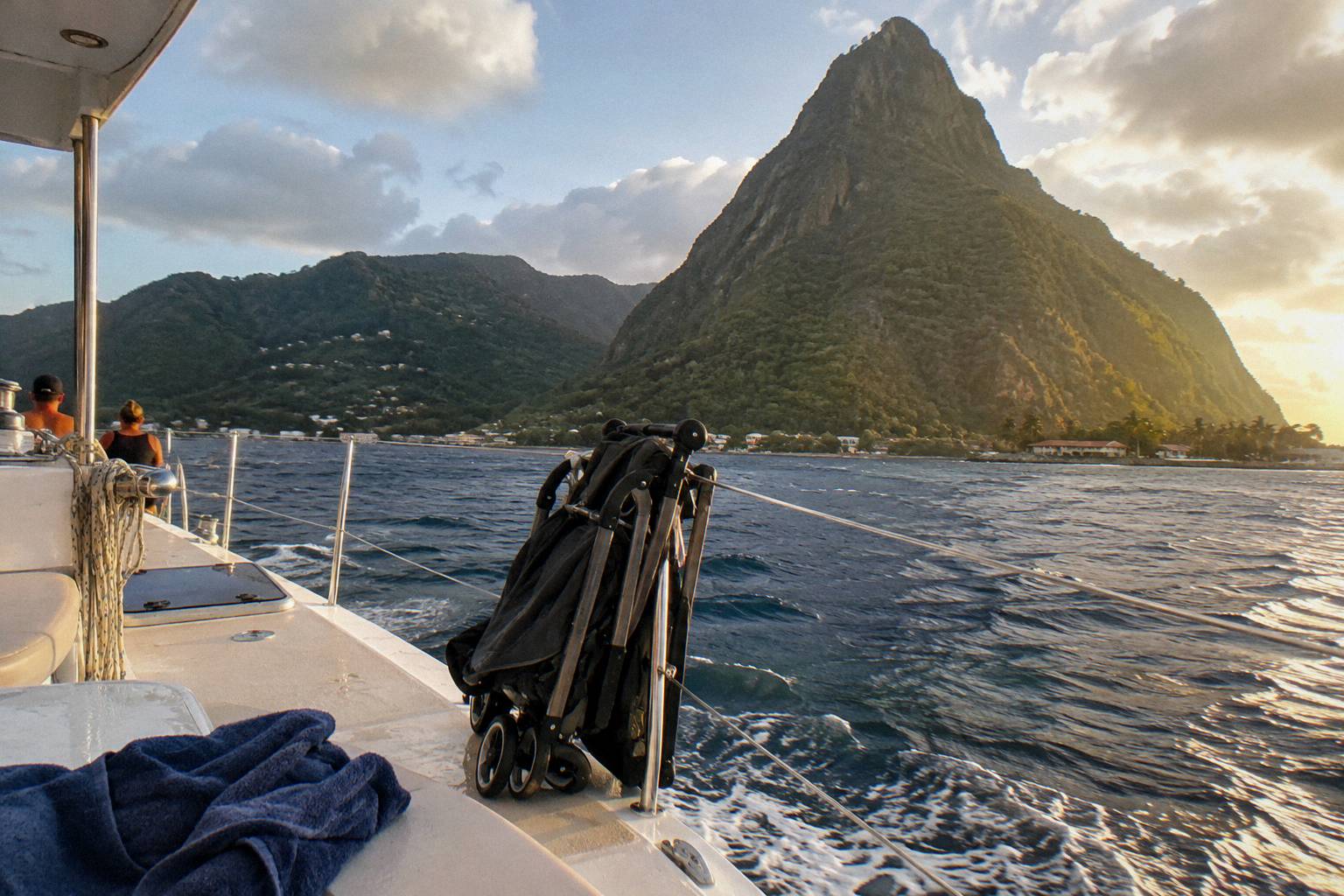
That geography, west-facing, sheltered, with several departure ports spread down the coast, is the reason this island is a rational place to spend an evening watching the horizon. If your interest is mainly the timing question, when the sun actually hits the water month by month, the companion piece on sunset sail times in Saint Lucia and when to board works through the calendar in detail.
What Affects Whether You See It
Four things decide a green-flash evening: the clarity of the air, the presence or absence of cloud sitting on the horizon, an unobstructed view of the point where the sun meets the sea, and the height of your eye above the water. None of them is controllable from a booking page, and all of them can be read in the half hour before the sun goes down. The table below sets out each condition plainly, with no figures.
| Condition | How it helps or hurts |
|---|---|
| Haze in the air | Scatters light and softens the colour separation; a hazy evening can still be beautiful but works against the flash |
| Clouds sitting on the horizon | The most common spoiler; a low bank where the sun sets hides the final sliver entirely |
| A clear, open horizon | The non-negotiable requirement; open sea with no headland, peak or moored vessel in the sun's path |
| Height of the observer | A slightly elevated deck raises your horizon line and shortens the path your eye takes through the densest air |
Haze deserves a plain explanation, because it is the subtlest of the four. Refraction needs a sharp image of the sun's edge to work with. Aerosols and salt air scatter the shorter wavelengths before they reach you, which is part of why tropical sunsets are so intensely orange, the same physics that makes the flash possible also paints the sky you came for. On some evenings the tradeoff falls one way, on some the other, and there is no way to know which until you are out there. The conditions that make a green flash possible are the conditions of that specific evening's air, and they are not forecastable in the way rain is. Other pages covering the same trip are gathered on St Lucia Sunset Cruise.
Cloud behavior is more legible. A sky dotted with mid-level cloud can still deliver, since the flash needs only a gap at the horizon line; what kills the chance is a solid band sitting where the sun goes down. Watching that band for the last half hour is itself a pleasant way to end a sail. Eye height is the one factor a booking choice influences: a catamaran's raised deck or a flybridge puts more of the densest, lowest air beneath your sight line, which marginally sharpens the image of the sun's edge. It is a small effect, but it is real, and it is one reason deck layout is worth a glance when comparing boats.
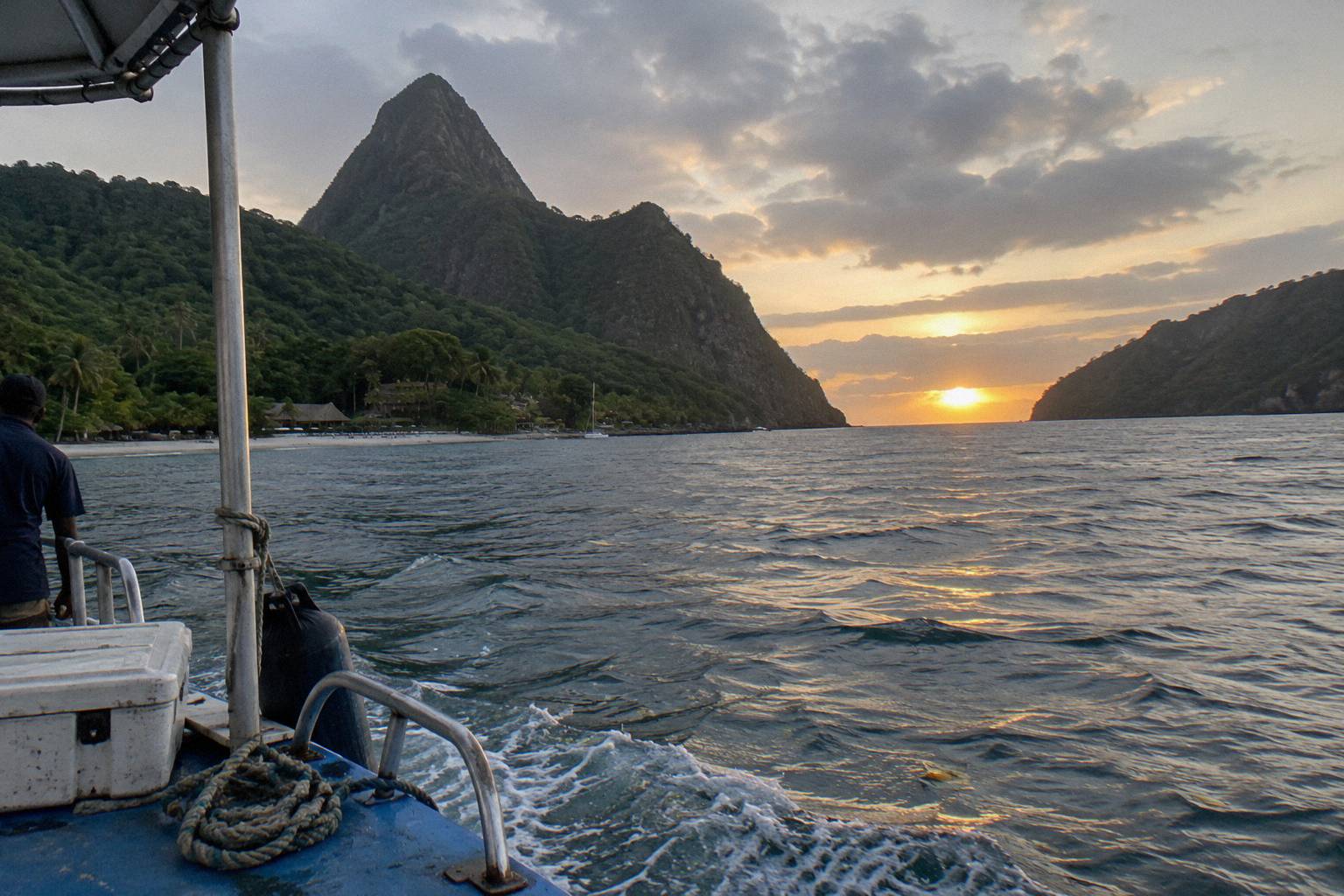
One caution belongs here rather than further down: never stare at the sun while it is still bright. The flash hunt is a last-minute discipline. You watch the horizon, the cloud bank, the general scene, and only in the final moments, when the disc is dim and nearly gone, do you fix your eyes on the sliver. Sunglasses off at that point, since a dark lens hides the very greens you are looking for. Anyone who tells you they watched the sun for the whole hour to "not miss it" was watching the wrong thing and doing their eyes no favors.
When To Sail: Sunset Times And Evening Conditions By Month
Sunset in Castries runs from about 5:33 pm in late November to about 6:36 pm in mid July, a spread of about one hour across the year, and the month you choose changes both how much evening light you get and how likely the air is to be clean. The times below are local time for the 15th of each month, cross-checked against an independent sunrise-equation calculation that agreed within a minute every month. The rainfall figures are monthly means, and they matter here because the wet season's moisture loading is a haze factor in its own right.
| Month | Sunset on the 15th | Mean rainfall |
|---|---|---|
| January | About 5:55 pm | 105 mm |
| February | About 6:08 pm | 70 mm |
| March | About 6:14 pm | 65 mm |
| April | About 6:17 pm | 85 mm |
| May | About 6:23 pm | 105 mm |
| June | About 6:33 pm | 155 mm |
| July | About 6:36 pm | 200 mm |
| August | About 6:26 pm | 220 mm |
| September | About 6:05 pm | 205 mm |
| October | About 5:44 pm | 250 mm |
| November | About 5:33 pm | 235 mm |
| December | About 5:38 pm | 130 mm |
Read the two columns together and a pattern appears. The driest months, March at 65 mm and February at 70 mm, pair with sunsets a little after 6 pm, which means a dry-air evening with a comfortable amount of daylight to get on the water. The wettest months, October at 250 mm and August at 220 mm, bring earlier sunsets in October's case and a greater share of convective cloud. The island's seasons frame this: the dry season runs about January to mid April, the wet about mid June to November, with December to early January and mid April to mid June transitional. None of this predicts a green flash; it predicts the statistical texture of the evenings you will be sailing in. The Saint Lucia climate reference carries the season definitions and the monthly figures behind the table.
One more calendar note belongs to this section because it is the only place it fits. The Atlantic hurricane season runs June 1 to November 30 and overlaps the wet season almost exactly, and the National Hurricane Center's 1991 to 2020 averages count 14 named storms, 7 hurricanes and 3 major ones basin-wide in a season. That is a basin statistic, not an island forecast, and it says nothing about any particular week. What it does is explain why late summer and autumn sails carry a slightly higher chance of rescheduling, which is one reason the free-cancellation terms on most of the island's evening sails are worth reading before you commit. For a fuller treatment of month choice, the guide to the best months for a sunset sail takes the climate story further.
How To Watch For It From The Deck
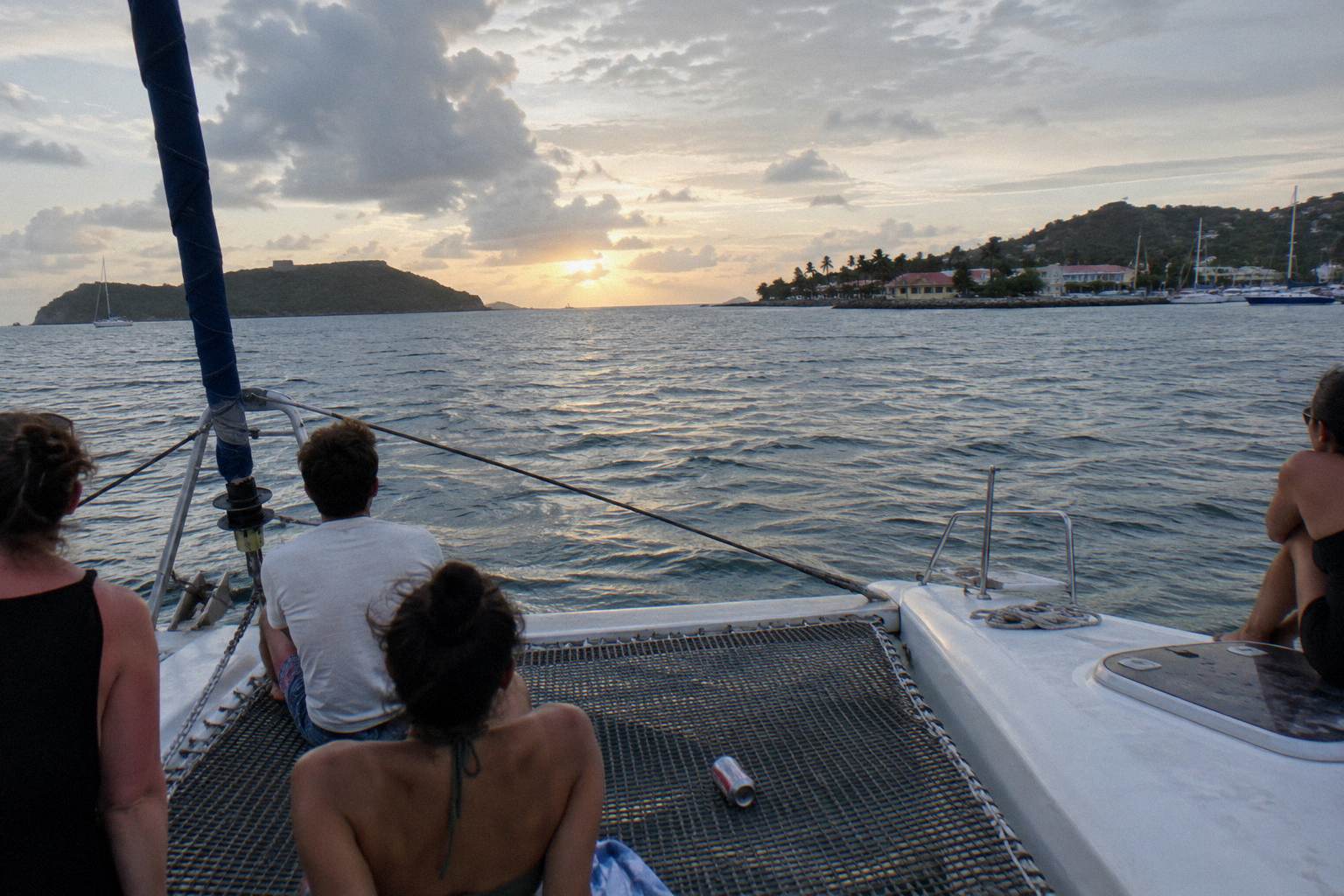
The watching technique is simple: pick your spot before the sun gets low, keep an unobstructed line on the point where it will meet the sea, and give the horizon your full attention for the final minute, because the flash lives entirely in the last sliver. Nothing about this requires equipment or expertise. It requires position, patience and a willingness to stop chatting for sixty seconds at the one moment the evening has been building toward. Choose the western rail or the highest open deck, check that no mast, canopy support or anchored boat sits in the sun's path, and settle in while the sun is still a few degrees up.
The half hour before is for reading the sky. Look west and find where the sun will touch: is the horizon line sharp or milky, is there a cloud band parked on it, is there a gap that is widening or closing? A closing gap can still work if it holds until the final minute. Haze you cannot do anything about, so enjoy the colour it produces instead. When the disc is low and dimming, that is the moment to fix your gaze on the top edge. Do not blink much, do not look away, and keep watching a beat after the last of it goes, because the flash, when it comes, is at and just past the instant of disappearance.
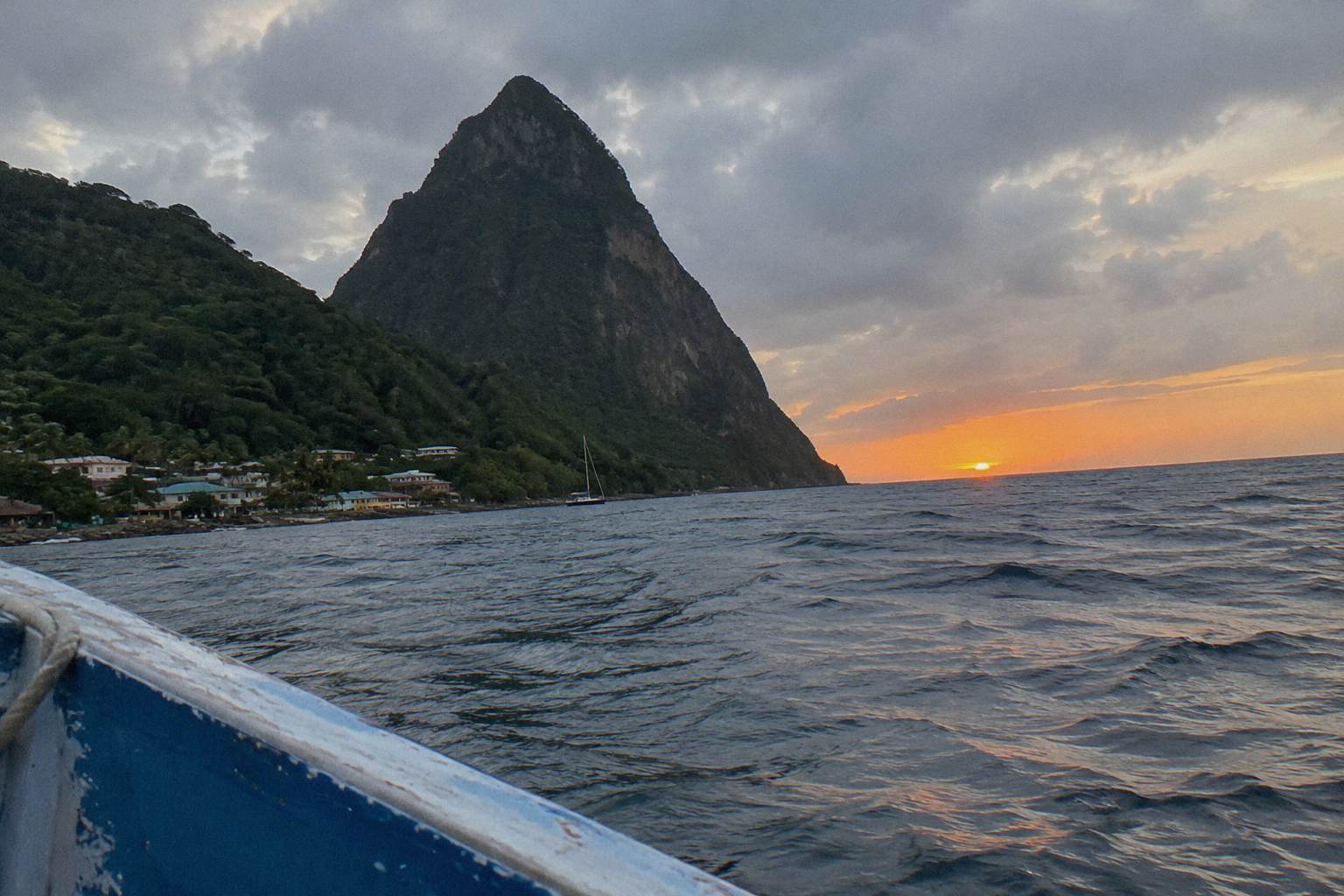
A word on cameras, since every deck has several pointed west. Photographing a green flash is harder than seeing one, because the effect is brief and dim relative to what a phone's automatic exposure wants to do with a bright horizon. If the goal is your own memory of it, put the phone down for the last minute. If the goal is a photograph, brace the camera, lock exposure on the sky beside the sun, and accept that most attempts produce a lovely sunset picture and no flash. Neither outcome is a failure of the evening.
The last practical point is timing your attention against the boat's own rhythm. On a two-hour sail the final twenty minutes are usually the ones closest to shore or back inside the bay, and a heading change in the last ten minutes can swing a mast or a canopy edge across your sight line. If the flash matters to you, it is fair to pick your rail position early and to keep one eye on what the boat is doing, without inventing obligations for any crew: their job is the safe running of the sail, and the horizon-watching is yours.
Which Sails Give You The Evening And The Horizon
Between the shared and private options on this island's west coast, the meaningful choices for a horizon-watching evening are group size, departure port, vessel type and price, and every one of them is a trade rather than an upgrade. Shared sails spread the cost and run on a set rhythm; private boats buy you control of the heading and the crowd.
| Sail | Format and duration | From price | Notes that matter for the horizon |
|---|---|---|---|
| Champagne Sunset Sail in St. Lucia, Sea Spray Cruises Ltd., 4.5 from 221 reviews | Shared, 2 hours, from Rodney Bay | From US$75 | Open bar, glass of champagne, hotel pickup and drop-off in the north; free cancellation to 24 hours before |
| Luxury Sunset Cruise Experience Lucian Sunset Vibes, Lucian Adventures, 5.0 from 17 reviews | Semi-private speedboat, 2 to 10 guests, 2 hours, from Rodney Bay | From US$95 | Small-group 33ft speedboat; alcoholic beverages and snacks included |
| St. Lucia Luxury Sunset Cruise From Castries, Island Routes, 3.9 from 18 reviews | Shared 50ft catamaran, 3 hours, from Castries | From US$174 | Premium bar, hors d'oeuvres and seafood cocktails; minimum age 16, all sales final |
| Private Sunset Cruise in Caribbean in St. Lucia, Dream boat tours, 4.6 from 84 reviews | Private, up to 10 guests, 2 hours | From US$150 | Flexible start times; fuel surcharge US$40 per booking, US$50 for Marigot Bay pickups, US$100 for Soufriere pickups (amounts as listed, currency not stated) |
| St. Lucia Private Sunset Cruise, Captain Cliff Adventure Tours | Private, up to 14 guests, 2 hours | From US$193 | Beer, water, sodas, local rum and wine included; hotel pickup only for hotels with docks |
| Private Catamaran Sunset Cruise from St Lucia for Up to 15 Guests, Sea Spray Cruises Ltd. | Private, up to 15 guests, 2 hours, from Rodney Bay Marina | From US$1,285 per boat | Open bar, all taxes and fees, hotel pickup and drop-off included |
The pattern to read is that duration and deck, not price alone, shape the watching. The three-hour Castries catamaran gives the longest window on the water and a big raised platform; the semi-private speedboat gives the smallest group and a low, close-to-the-water eye line; the shared champagne sail sits in between on both counts. The St Lucia Sunset Cruise site's featured pick, the Champagne Sunset Sail, pairs the shared format with an open bar and hotel pickup in the north, with free cancellation up to 24 hours before start, and check availability for your dates if that format fits.
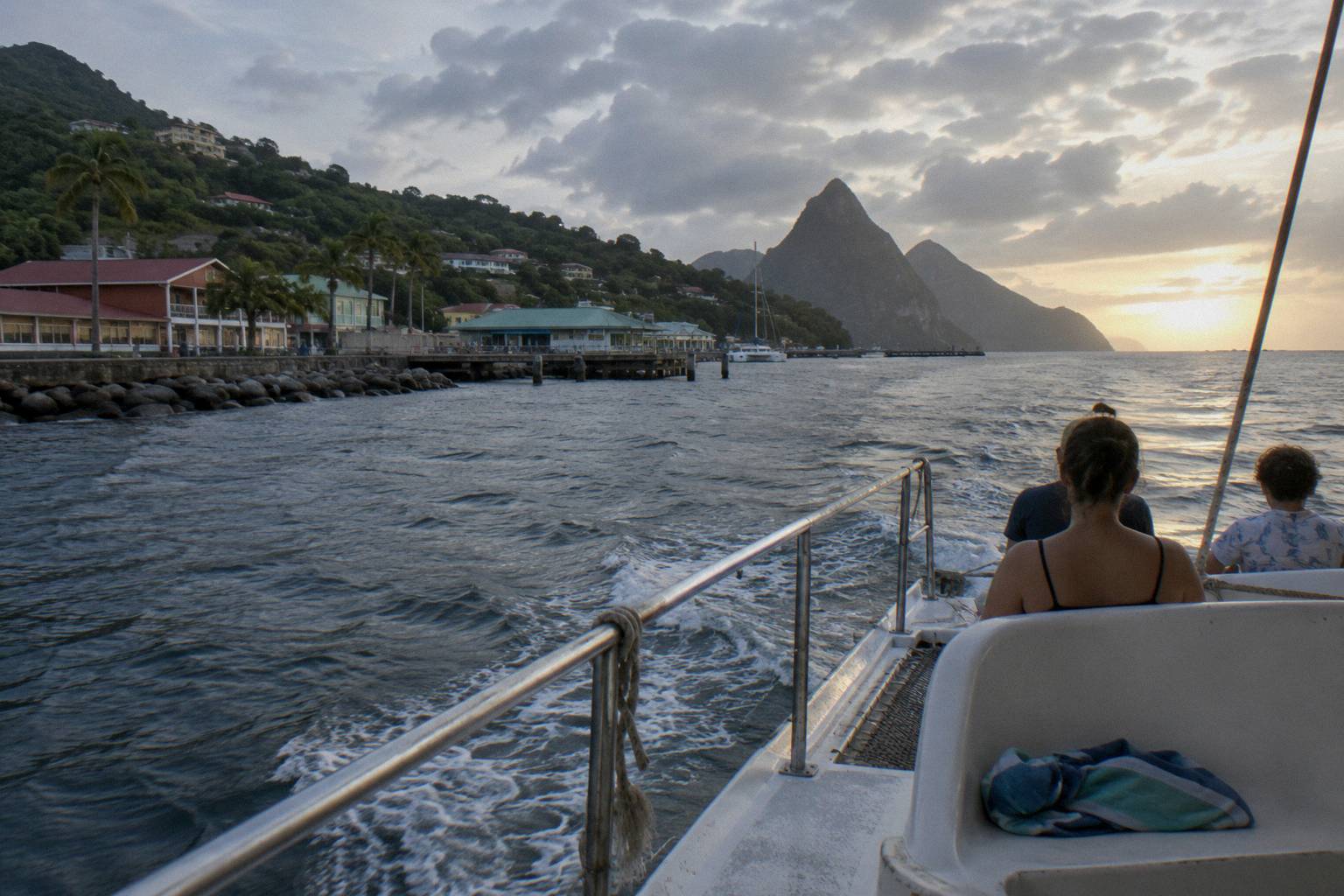
Private options earn their place on this list for one specific reason connected to the topic: heading control. On a private boat the group's wishes carry more weight, and a request to hold a westward heading with a clear rail through the final minutes is a small ask on a two-hour charter. The budget end of that market, Dream boat tours' private cruise with flexible start times, and the Soufriere-based options running under the Pitons, all offer it; the Soufriere boats simply start with those 798 m and 743 m peaks close at hand, so their westward run matters more. Sea temperature, typically 26 to 29 °C year round, keeps the deck comfortable in every month, so the choice is genuinely about format rather than season.
If you are weighing the shared-versus-private question more broadly, including crowd feel and cost logic, the guide on choosing a private sunset cruise or a shared sail is the fuller treatment, and it links onward to the format comparisons.
What Trips People Up Before You Book
The mistakes that sour green-flash evenings are all expectation errors: treating the flash as the point of the sail, trusting any odds, watching the bright sun too early, and booking a product whose route or terms work against a clean horizon at the final minute. Each of these is avoidable with a minute of forethought, and none of them costs anything to fix. The first is the biggest. An evening sail on a west coast is a good product on its own merits, drinks, sea air, the colour build-up, and the flash is a possible bonus attached to its final second. Book the evening; keep the flash as a free option on top.
The odds trap deserves its own sentence, because the internet is full of confident numbers. A percentage quoted in a review or a forum is someone's guess dressed as data. The same scepticism applies to promises: no operator can deliver specific clouds, specific haze or a specific colour, and a booking page that implies otherwise is selling weather it does not own. The frame is that the west coast gives you the geometry, the physics gives you the possibility, and the evening's air makes the call.
The practical traps are smaller but real. Check the departure port against your accommodation, because a Sail from Soufriere pairs naturally with a Soufriere stay and poorly with a late return to Rodney Bay, and no boat time or drive time between the two has a sourced figure. Read the cancellation line before you pay: most of the roster allows free cancellation up to 24 hours before start, but the Castries luxury catamaran is all sales final, which changes the calculus on a marginal-weather forecast. And note the minimum age where it exists, 16 on that same Castries product, against 0 on most of the others, if the evening is a family one; the guide on a sunset sail with kids covers that angle. See dates and live prices on the booking page for whatever format you settle on, since amounts move with the calendar.
Common Questions About The Green Flash From A Boat
What Is The Green Flash?
A brief optical effect at the instant the last sliver of sun disappears below the horizon. Atmospheric refraction bends the shorter, greener wavelengths more than the red ones, so the final sliver of the sun's image can show green for a moment. Temperature-inversion layers near the horizon can magnify the effect.
Can You See The Green Flash In St Lucia?
Yes, it is possible, because the west coast faces open Caribbean Sea and evening sails put you on the water with a clear western horizon. Whether it appears on any given evening depends on the air, haze and cloud that evening, and no source gives odds for it.
How Rare Is The Green Flash?
No reliable figure exists for its frequency anywhere, including St Lucia. Treat it as a bonus that depends on the conditions of the specific evening rather than a likely or unlikely event, and be wary of any percentage quoted online.
When Is The Best Time Of Year To Try To See It From A St Lucia Sail?
Sunset runs between roughly 5:33 pm in late November and 6:36 pm in mid July. The driest months, March and February, statistically bring cleaner air, while the wettest, October and August, bring more cloud. No month guarantees the effect.
Do You Need To Be On A Boat To See The Green Flash In St Lucia?
No. Any west-facing vantage with an unobstructed sea horizon can work, including beaches and bars along the leeward coast. A boat adds a low, steady eye line over open water and no headlands in the sun's path, which is why evening sails are a strong vantage.
How Do You Watch For The Green Flash Safely?
Do not stare at the sun while it is still bright. Watch the horizon and the cloud bank during the last half hour, then fix your eyes on the dimming top edge only in the final moments, without sunglasses, and keep watching a beat past the point of disappearance.