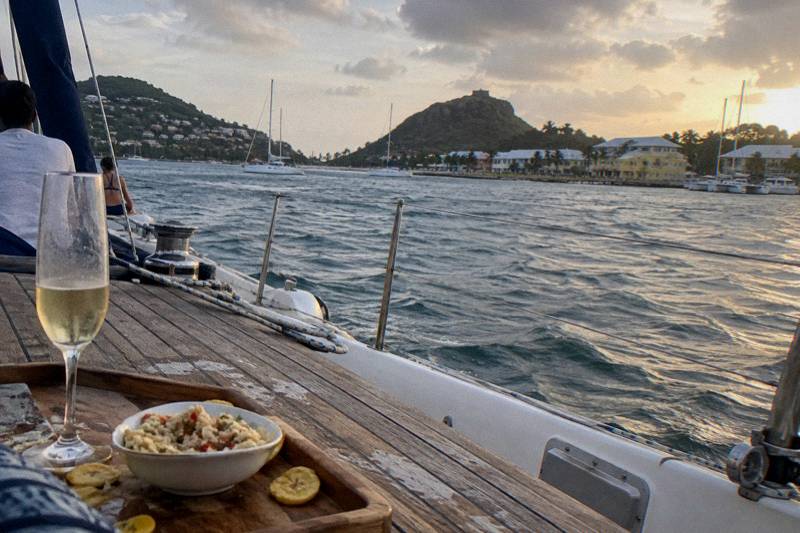
Can You Swim Or Snorkel On A Sunset Sail In St Lucia?
Whether swimming or snorkeling happens on a St Lucia evening sail, what the formats actually include, and the questions to ask before booking a sunset cruise.
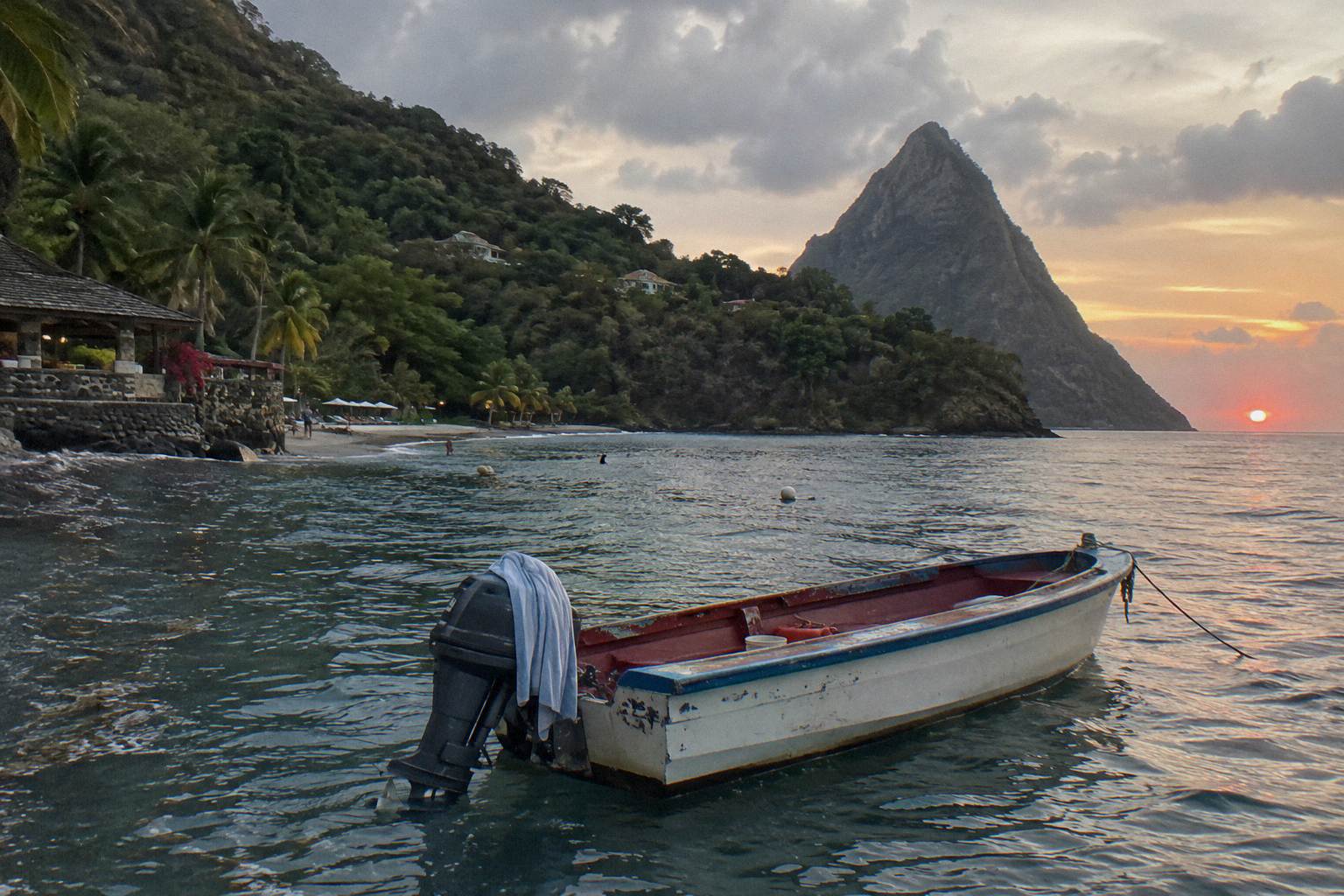
Every evening boat trip on this site belongs to a wider family of private sunset cruises, and this article sits within that collection. It answers a narrow question honestly and directly: whether getting in the water is part of the evening.
| Fact | Detail |
|---|---|
| Format | Sit-and-sail evening trips, mostly 2 to 3 hours |
| Sunset window | About 5:33 pm to about 6:36 pm across the year, Castries |
| Sea temperature | Typically 26 to 29 °C |
| Calmest water | The west, Caribbean-facing coast is the sheltered side |
| Soufriere coast | A zoned marine area run by the Soufriere Marine Management Association |
| Swim or snorkel stops | Depends on operator and trip, ask before booking |
| Drinks | Included on the shared and most private formats |
No St Lucia sunset sail promises swimming or snorkeling in its listed inclusions, so the honest answer is that it depends on the operator, the route, and the conditions that evening. The published inclusions across the formats are drinks, snacks, guides, and transfers, with a water stop neither listed nor excluded, so if getting in the sea matters, ask before booking.
A sunset sail is, by design, a sit-and-sail format. The trips run two to three hours, timed so the boat is on the water as the sun goes down over the Caribbean. The roster of evening products names drinks, snacks, open bars, champagne glasses, local rum, guides and hotel transfers among what is included, and none of them names a swim stop, snorkel gear or a beach pause. That silence is not a refusal. It means the decision sits with the operator and the skipper on the night, and the only way to know is to ask.
The reason for the silence is partly timing. With sunset falling between about 5:33 pm in late November and about 6:36 pm in mid July, an evening trip that starts in the late afternoon has limited hours of daylight to work with, per the Castries sunrise and sunset table. A two-hour sail that spends its first hour motoring to a snorkel spot and its second hour drifting back may fit, or it may not, and the trade-offs belong to the operator's route planning rather than to a fixed promise.
It also depends on format. A private boat with two to fourteen guests has more flexibility than a shared sail carrying a full deck of passengers, because the skipper can read the group and the water and make a call. A small-group speedboat with two to ten guests sits between the two. The private formats are where a water stop is most plausible, which is one reason families and groups who want the option lean that way.
Each is a two to two-and-a-half-hour private evening on the water with drinks included. Before booking any of them, the swim question is worth one line to the operator, because the answer shapes what you wear, what you pack and what you expect from the evening.
Why The Evening Format Is Built Around Sailing, Not Swimming
The evening products on this island are structured as sailing experiences: a fixed window of two to three hours, drinks and snacks on board, and a route chosen for coastline and sunset views rather than for reef stops. The written inclusions are consistent on this point across shared and private formats. Every product names beverages and most name snacks or refreshments, while no product names a swim or snorkel stop among what is included.
Look at what each format actually advertises and the pattern is clear. The shared "Champagne Sunset Sail in St. Lucia", 4.5 from 221 reviews and from US$75, includes light refreshments, an open bar, snacks, a glass of champagne and hotel pickup in the north. The semi-private "Luxury Sunset Cruise Experience Lucian Sunset Vibes", 5.0 from 17 reviews and from US$95 on a 33ft speedboat carrying two to ten guests, includes alcoholic beverages and snacks. Nothing about water stops in either case.
| Product | Format | Named inclusions | Duration |
|---|---|---|---|
| Champagne Sunset Sail | Shared | Open bar, snacks, champagne, refreshments, hotel pickup in the north | 2 hours |
| Luxury Sunset Cruise Lucian Sunset Vibes | Small group, 2 to 10 guests | Alcoholic beverages, snacks | 2 hours |
| Private Sunset Cruise in Caribbean | Private, up to 10 | Local rum, bottled water, sodas, selected dock pickups | 2 hours |
| St. Lucia Private Sunset Cruise, Marigot route | Private, up to 14 | Beer, water, sodas, local rum, wine, local guide and taxes | 2 hours |
| Private Sunset Cruise, Pigeon Island route | Private, up to 10 | Local Piton beer, rum punch, sodas, water | 2 hours 30 minutes |
The pattern holds on the longer and larger formats too. The luxury 50ft catamaran from Castries, from US$174 and three hours, sells a premium bar, hors d'oeuvres and seafood cocktails. The private Sea Spray catamarans from Rodney Bay and Soufriere sell open bars, taxes and handling. Across the board, the products describe what happens on the boat, not what happens in the sea.
None of this rules a swim stop out. What it tells you is that the operators are selling an evening of sailing, and that anything beyond that is negotiated rather than advertised. A reader deciding between a daytime boat trip and an evening sail should note that daytime products generally carry the water-based itinerary, and the evening carries the light, the drinks and the horizon. For more on how those two differ, see choosing between a day boat tour and an evening sail.
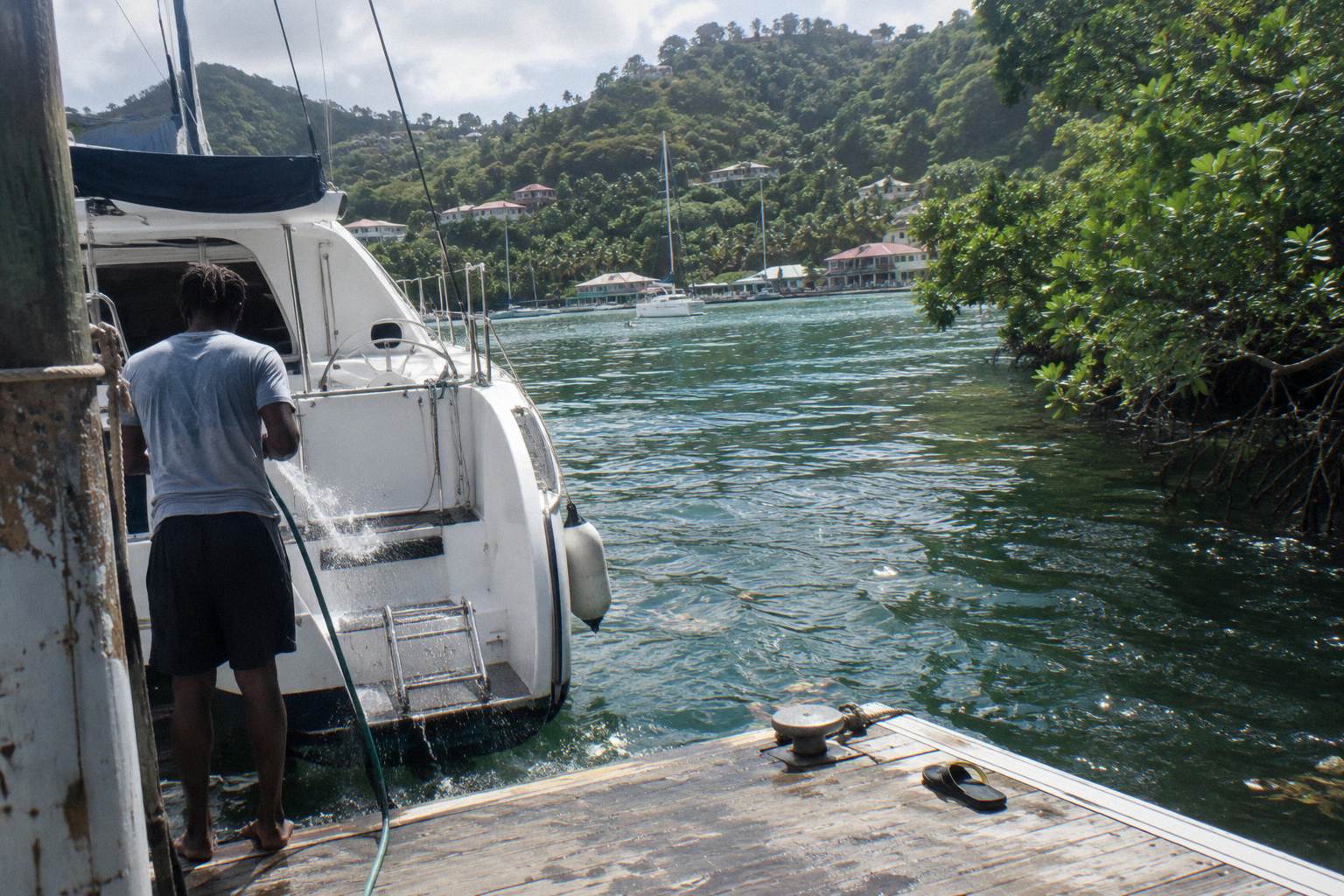
The featured product for this question is the "St. Lucia Private Sunset Cruise - Marigot Bay and Rodney Bay" by Captain Cliff Adventure Tours, from US$193 for a private boat carrying up to 14 guests, with beer, water, sodas, local rum and wine included and a local guide on board. It runs from Marigot Bay or Rodney Bay on a choice of 22ft, 26ft or 31ft boats. As a private charter, it is exactly the kind of trip where a request for a water pause can be discussed directly with the skipper. The full details sit on the Marigot Bay private sunset cruise page.
Where The Calm Water Sits: The West Coast And Marigot Bay
If a swim stop does happen, it will almost certainly be on the island's west, Caribbean-facing coast, which is the sheltered and calmer side of St Lucia compared with the Atlantic east coast. Marigot Bay, on that west coast, is described by the island's tourism body as having calm waters. The Soufriere stretch of the same coast is a zoned marine area, which is why much of the island's in-water activity concentrates there.
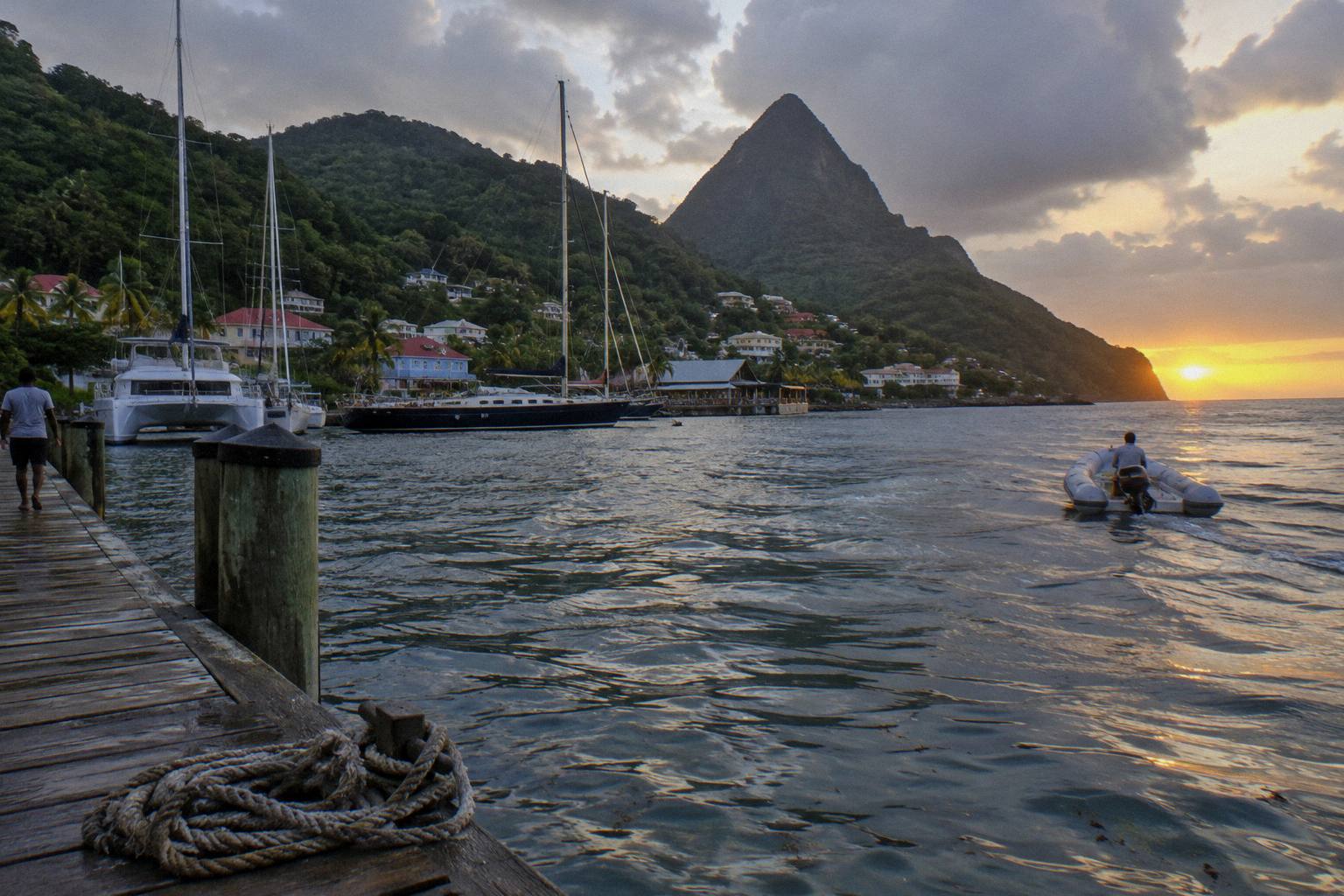
The geography does most of the work here. The west coast faces the Caribbean Sea and the setting sun; the east coast faces the Atlantic and its stronger trades. All of the evening products on this site depart from west-coast points: Rodney Bay, Castries, Marigot Bay and Soufriere. So the water any sunset sail sits on is the island's calmer side to begin with.
Marigot Bay is the standout. The Saint Lucia tourism site's Marigot Bay page describes it as one of the most beautiful bays in the Caribbean, with calm waters, a scenic marina that attracts yachts from around the world, waterfront dining and boat excursions. A private cruise that starts or passes through Marigot Bay is starting in the kind of sheltered water where a pause at anchor is comfortable, if the skipper offers one.
Further south, the coast around Soufriere is managed as the Soufriere Marine Management Area, a zoned marine area covering marine reserves, fishing priority areas, multiple-use areas, yacht mooring areas and recreational areas, run by the Soufriere Marine Management Association. That zoning exists because the reefs and in-water activity there matter, and several private sunset products depart from Soufriere. Two of them, from US$150 and US$220, put you on that stretch of coast for the evening; a third runs three hours of sailing from US$260.
Whether any given evening trip pauses in that water is still the operator's call, and conditions and daylight decide it. What the geography guarantees is only this: the water you would be in, if a stop happens, is the sheltered side of the island. For a dedicated look at the bay itself, see Marigot Bay at sunset from the water.
Booking the Marigot route early has a practical edge: private boats carry fixed guest counts, up to 14 on the largest of the three vessels, and free cancellation applies up to 24 hours before start, so a reserved evening costs nothing to move if plans shift. The price and the date you want are on the booking calendar.
What To Ask An Operator Before You Book
The right questions are short and specific: whether the trip includes a water stop, whether gear is carried, whether the route can pause in calm water, and what happens to the plan if conditions change. Ask them in writing on the booking page before paying, because the answers determine what you pack and what the evening actually looks like. A private charter gives you the most room to shape the route; a shared sail gives you the least.
| Question to ask | Why it matters |
|---|---|
| Does this trip stop for a swim or snorkel? | No evening product lists one as included, so the operator's reply is the only source |
| Is gear carried on board? | Nothing in the published inclusions names masks, fins or towels |
| Can the route pause in Marigot Bay or another sheltered spot? | Private formats can flex; shared formats follow a set plan |
| How long is the boat actually stationary? | A two-hour sail has limited daylight after the late-afternoon departure |
| What is the backup if the sea or weather changes? | Conditions, not the schedule, decide what runs |
On a private boat, the conversation is direct. You are hiring the vessel and the skipper for two or more hours, and requests about anchoring for a swim, adjusting the route or lingering in a bay are ordinary charter questions. The "Private Sunset Cruise in Caribbean" by Dream boat tours even advertises flexible start times, which is the kind of latitude that makes a water pause easier to arrange. Note its extras before you commit: a US$40 fuel surcharge per booking, and US$50 for Marigot Bay pickups or US$100 for Soufriere pickups. The rest of the planning pages sit on St Lucia Sunset Cruise.
On a shared or small-group sail, the question is simpler and the answer is firmer, because the deck runs to a plan that suits a full boat. Ask, but expect the reply to be about the evening's standard shape: sail, drinks, sunset, return. If a swim is the priority of your whole trip, an evening sail may not be the product that delivers it, and asking early saves a mismatch.
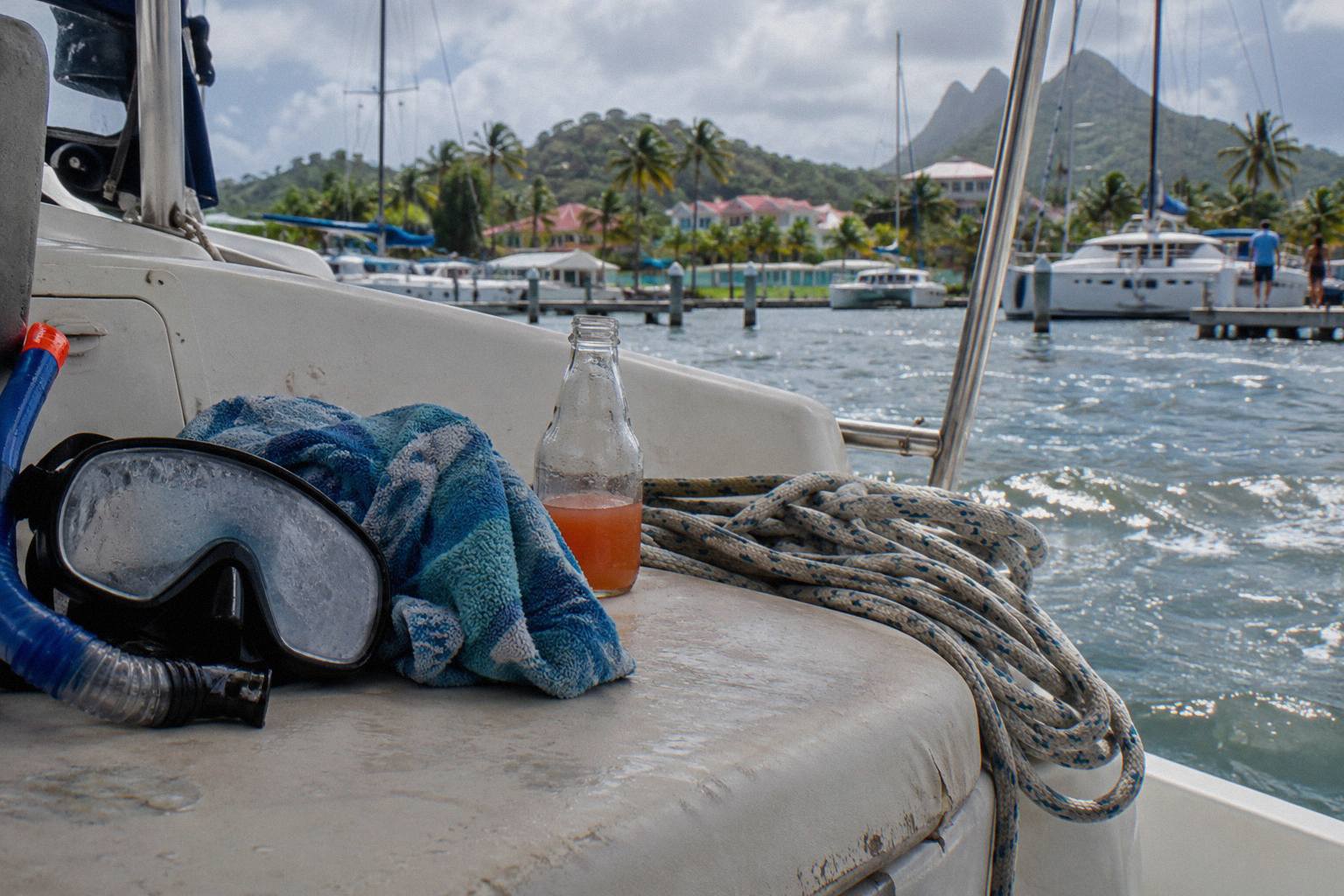
One more practical point: towels and a dry bag are worth bringing regardless of the answer. Evening air temperatures sit in the high twenties Celsius, sea temperatures typically run 26 to 29 °C, and a boat that does pause for a swim will not hand you a towel. Packing for the possibility costs nothing and means the evening can go either way without a damp ride home.
Sunset Times, Daylight And Why The Clock Shapes The Trip
Sunset in St Lucia shifts from about 5:33 pm in late November to about 6:36 pm in mid July, a spread of roughly one hour, and every sunset trip is planned backwards from that clock. Late-year departures leave earlier in the evening and mid-year departures later. Because tropical twilight fades fast, a water stop, when it happens, always comes before the sunset rather than after it.
The monthly drift is steady rather than dramatic. On the 15th of each month, sunset in Castries runs about 5:55 pm in January, 6:14 pm in March, 6:33 pm in June, 6:36 pm in July, 6:05 pm in September, 5:44 pm in October and 5:33 pm in November. That last figure is close to the year's earliest, around November 21. None of the products publish a departure clock time, so the way to know when your evening starts is the booking calendar for your date.
The tropical detail that surprises visitors from higher latitudes is how fast the light goes. Near 14 degrees north, dusk is short, and the window between a golden horizon and full dark is brief. A trip that wants you in the water will schedule that well before the sun reaches the sea, then reposition for the sail home. For the full picture on timing, see sunset sail times in Saint Lucia and when to board.
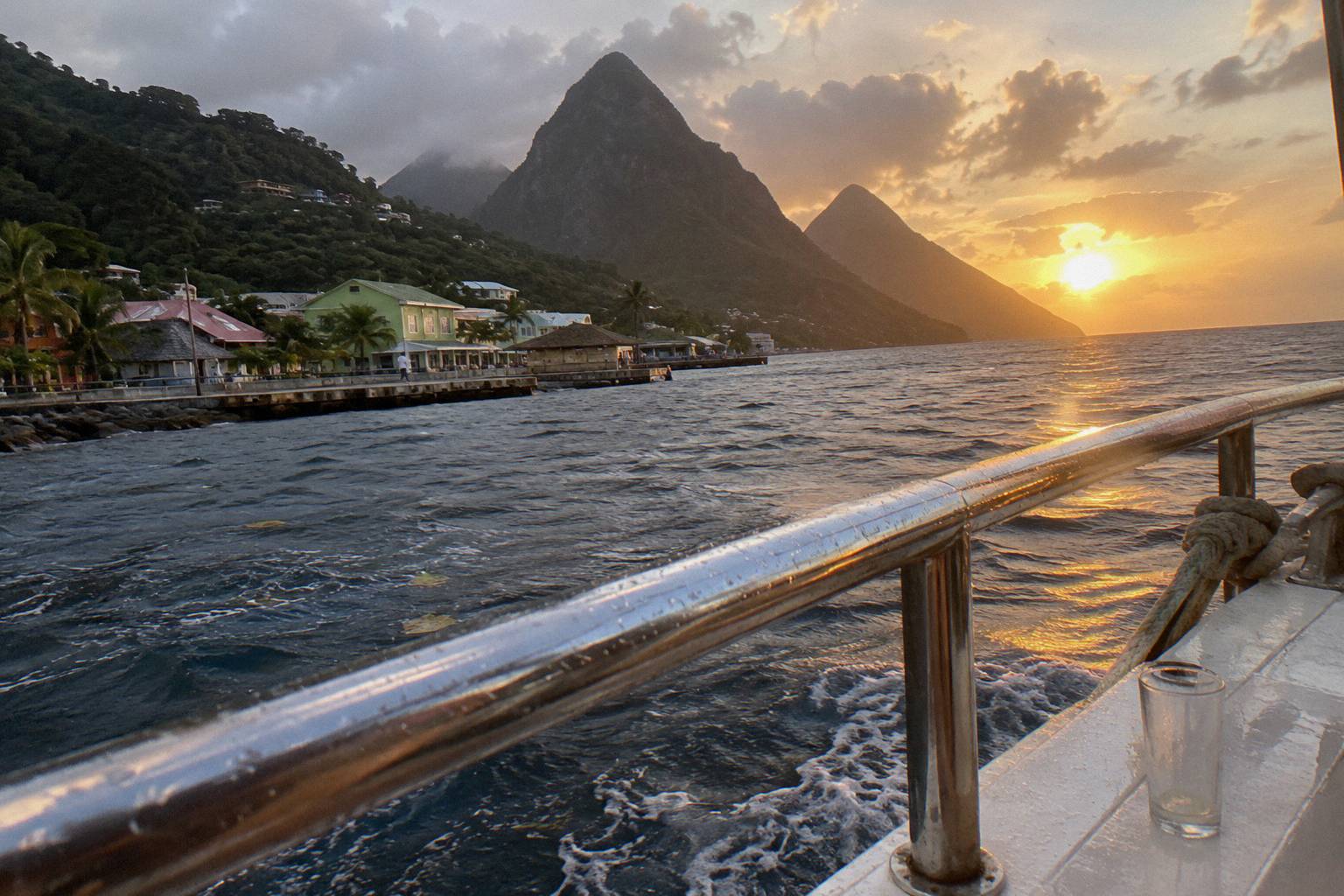
This clock is also why the answer to the swim question is rarely a simple yes. An operator looking at a two-hour window, a late-afternoon departure and a sunset that arrives at a fixed minute has to choose between sailing distance, anchoring time and the view. The same operator on a three-hour format, such as the luxury catamaran from Castries or the private Sea Spray charters, has more room to work with, though neither names a water stop in what it includes.
Seasons, Sea Temperature And Planning The Right Month
The sea around St Lucia stays swimmable all year at typically 26 to 29 °C, and the air stays warm with monthly means from 26 °C in January to about 28 °C in the wettest late-summer months, so temperature is never the reason to skip the water. The planning variable is rain: March is the driest month at 65 mm on average and October the wettest at 250 mm, with the dry season running about January to mid-April.
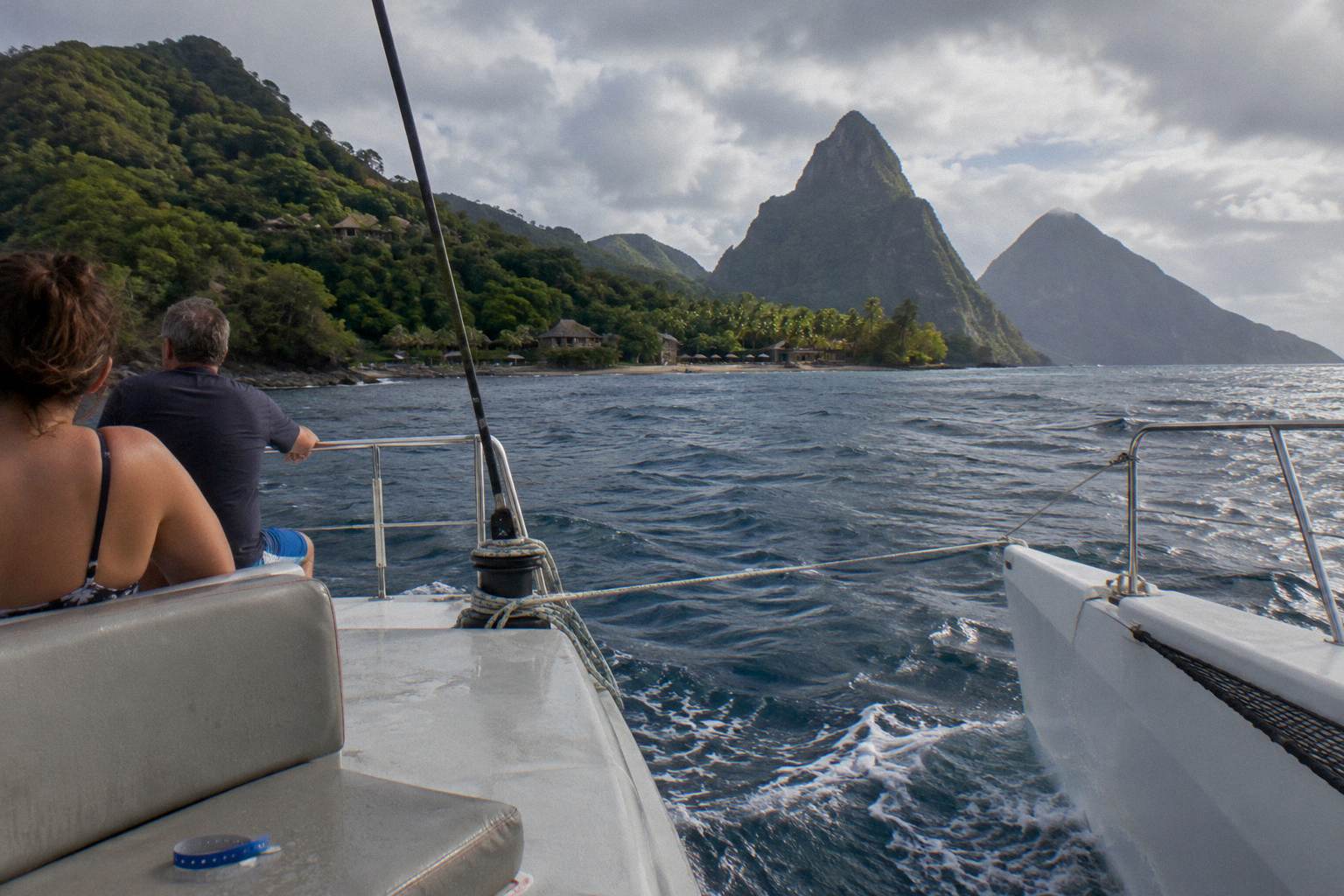
The seasonal split matters more for cloud than for warmth. The dry season, roughly January to mid-April, brings the lowest rainfall and the clearest evenings on average; the wet season, roughly mid-June to November, brings heavier rain in bursts rather than all-day gloom. December to early January and mid-April to mid-June sit between the two. For an evening built around a horizon, those averages are worth a glance when picking dates, per the Saint Lucia climate page.
One seasonal note belongs in every planning conversation: the Atlantic hurricane season runs June 1 to November 30 and includes the Caribbean Sea, and the 1991 to 2020 average season produced 14 named storms, 7 hurricanes and 3 major ones, per the National Hurricane Center climatology page. That is a basin-wide average, not a forecast for St Lucia, and evening sails run through the season with free cancellation up to 24 hours before start on nearly every product. It simply means autumn travellers should keep an eye on the forecast and know the cancellation terms.
If the evening does include time in the water, the temperature makes it easy. Sea temperatures of 26 to 29 °C mean no wetsuit, no hesitation and a quick dry in the evening air. The months with the warmest sea also overlap the wetter part of the year, so the trade-off is between warmer water and a slightly higher chance of an evening shower, a choice the guide to the best months for a sunset sail works through in detail.
What Trips People Up Before You Book
The common mistakes are assuming a swim stop is standard, treating an evening sail as a snorkel tour, ignoring the per-boat extras on private charters, and packing as if the boat supplies towels and gear. Each is avoidable with one message to the operator and a small bag. The products here are evening sailing experiences with drinks and snacks, and they reward being booked as exactly that.
The first trap is reading "cruise" and picturing a reef trip. The evening formats are sailing experiences: two to three hours, drinks on board, the coast and the sunset as the show. Readers who arrive expecting masks and fish are the ones disappointed, and the fix is a single question asked before payment. Ask the operator on the booking page whether the trip includes a water stop, and let the reply settle it.
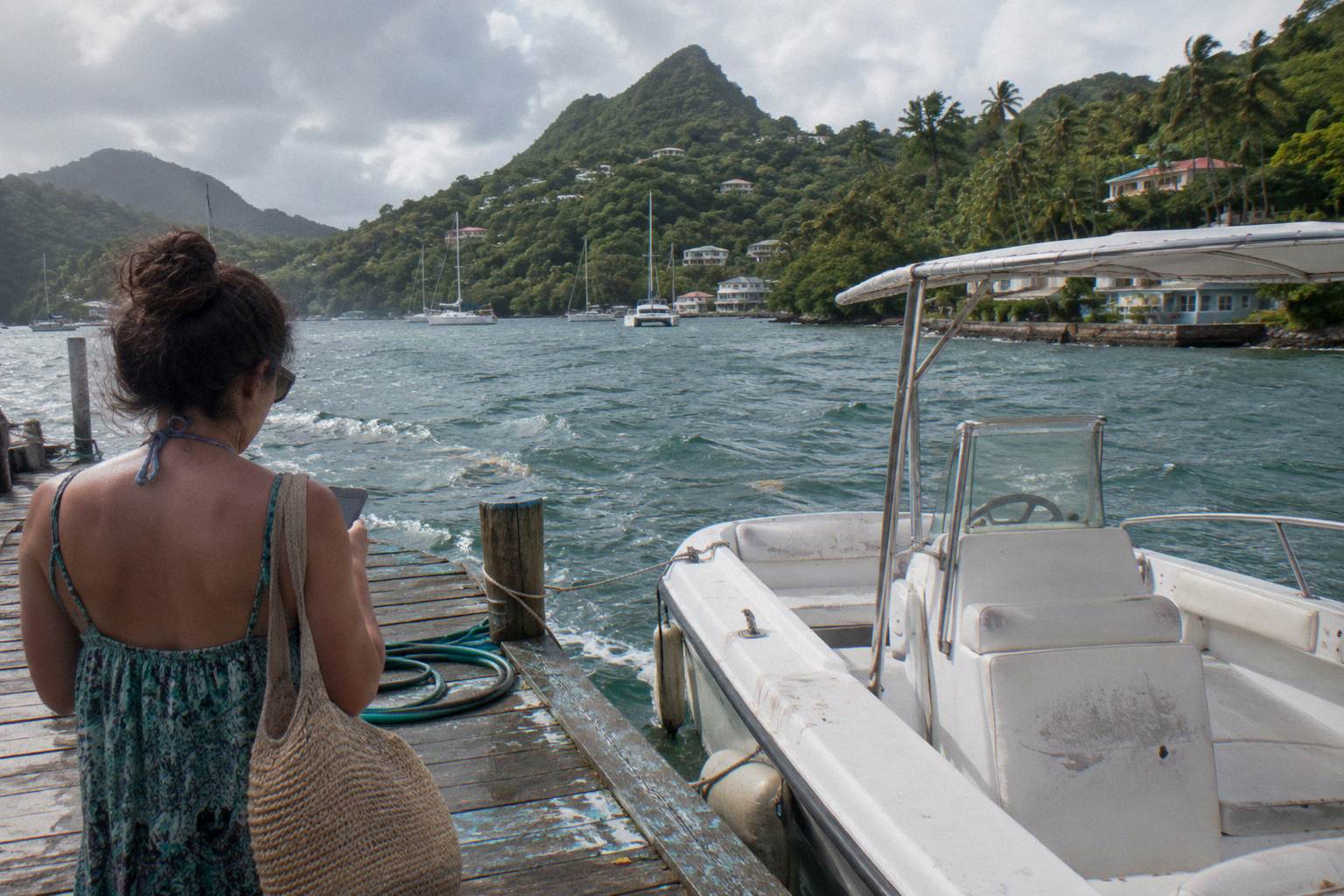
The second is ignoring surcharges and pickup limits on the private formats. The Dream boat tours product carries a US$40 fuel surcharge per booking, plus US$50 for Marigot Bay pickups and US$100 for Soufriere pickups, and its hotel pickup serves only selected properties with docks in the north. The Marigot route product likewise picks up only at hotels with docks. Reading the exclusions column before booking prevents a surprise on the day.
The third is booking the wrong format for the group. Minimum ages vary sharply: the luxury catamaran from Castries requires guests to be 16 or older and sells on an all-final basis with no free cancellation, while most other products welcome all ages and cancel free up to 24 hours before. A family with young children or a group that wants flexibility should check those two flags first, and the guide to taking a sunset sail with kids covers the family angle in full.
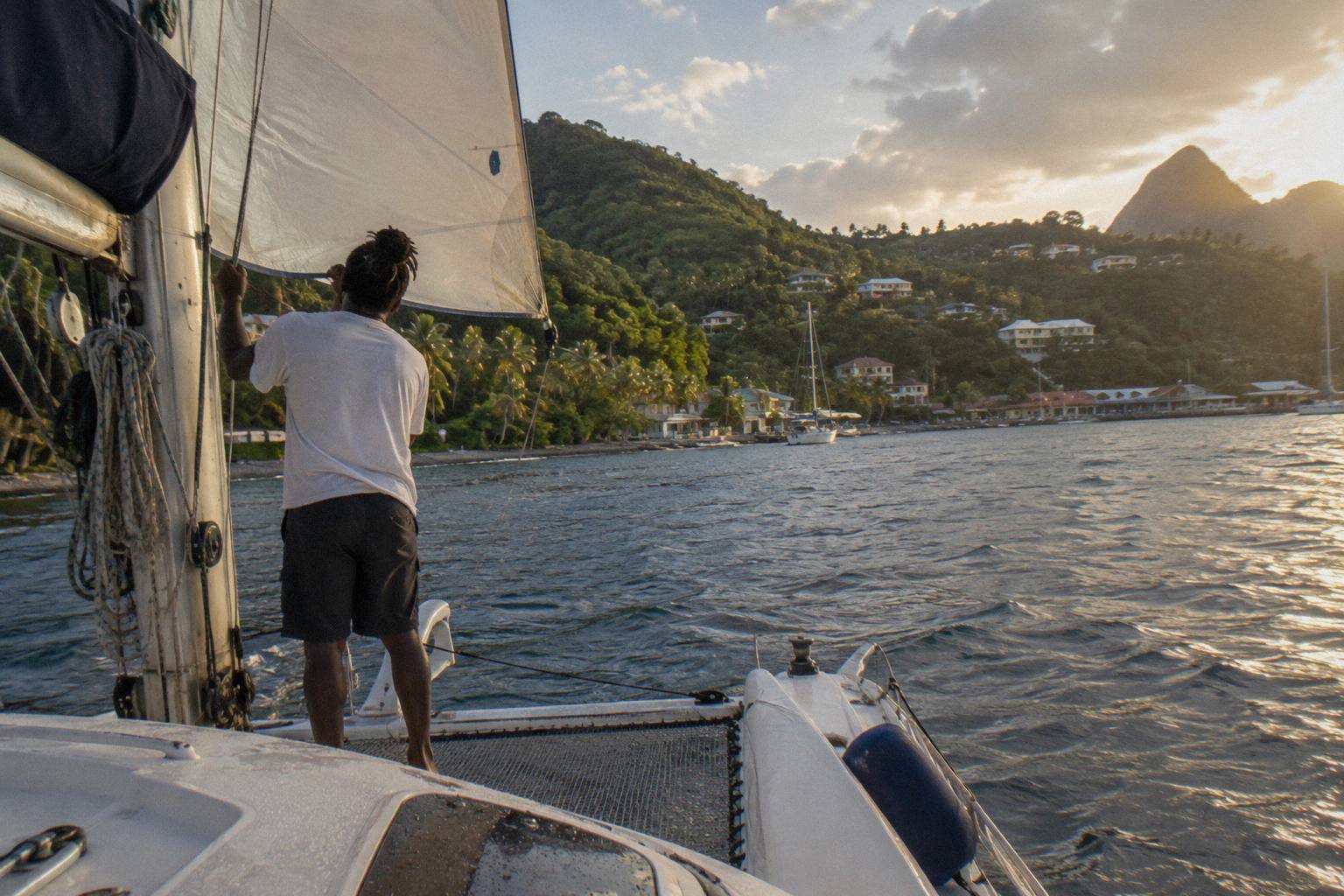
Finally, do not build the evening around the horizon alone delivering a spectacle. Cloud, haze and sea state decide what the sunset looks like, and no operator controls them. What the products do control is the boat, the bar and the route, and those are the things worth comparing. For that comparison, how to compare sunset sail operators lays out the format, price and cancellation differences in one place. The full picture of what evening trips include is covered in what is included on a sunset sail.
For a low-commitment private option, the rum-punch cruise from Rodney Bay runs from US$150 with local rum, bottled water, coke and sprite included, flexible start times and free cancellation up to 24 hours out. It is a working example of the format where a swim question can be asked and answered directly with the operator before the boat leaves the dock.
Common Questions About Evening Sails And The Water
Can You Swim Or Snorkel On A Sunset Sail In St Lucia?
It depends on the operator and the trip. No evening product lists a swim or snorkel stop among its inclusions, which are drinks, snacks, guides and transfers. Ask the operator on the booking page before booking, especially on a private charter where the route can flex.
What Is Actually Included On An Evening Sail?
Drinks and snacks, consistently. Shared formats include open bars, snacks and sometimes a glass of champagne; private formats include beer, sodas, water and local rum or rum punch, with a guide on some trips. Durations run two to three hours and most products cancel free up to 24 hours before start.
Which Part Of St Lucia Has The Calmest Water?
The west, Caribbean-facing coast is the sheltered side of the island, and all the evening products depart from it. Marigot Bay is described by the island's tourism body as having calm waters, and the Soufriere stretch is a zoned marine management area.
Is The Sea Warm Enough To Swim In The Evening?
Yes, on temperature. Sea temperatures around St Lucia typically run 26 to 29 °C all year, with evening air in the high twenties Celsius, so warmth is not the limiting factor. Daylight and the operator's plan are.
Do Private Charters Stop For Swimming More Than Shared Sails?
Private charters have more room to, because the skipper sets the route for two to fourteen guests rather than a full shared deck. Nothing is promised either way, so raise it with the operator when booking, and treat the reply as the plan.
Should You Bring A Towel And Swimwear Anyway?
Yes. Packing for the possibility costs nothing, and no product names towels or gear among its inclusions. A dry bag, a towel and swimwear under your clothes let the evening go either way.